
A marketing team reviews its monthly performance report.
Organic traffic looks stable.
Paid campaigns deliver leads.
Content output stays consistent.
Yet something feels off.
Despite doing “everything right,” visibility grows slower than expected.
Competitors appear more often in summaries, recommendations, and AI-powered results.
The issue is not effort or budget. It is stack mismatch. Digital marketing no longer runs on SEO alone. Search engines, content platforms, and discovery systems now rely on AI-driven evaluation.
Users ask questions differently, platforms respond with answers, not lists.
Algorithms decide relevance faster than humans can adjust manually. This shift creates a new reality.
SEO still matters, but it no longer works alone.
AEO and AIO now play critical roles in visibility and performance.
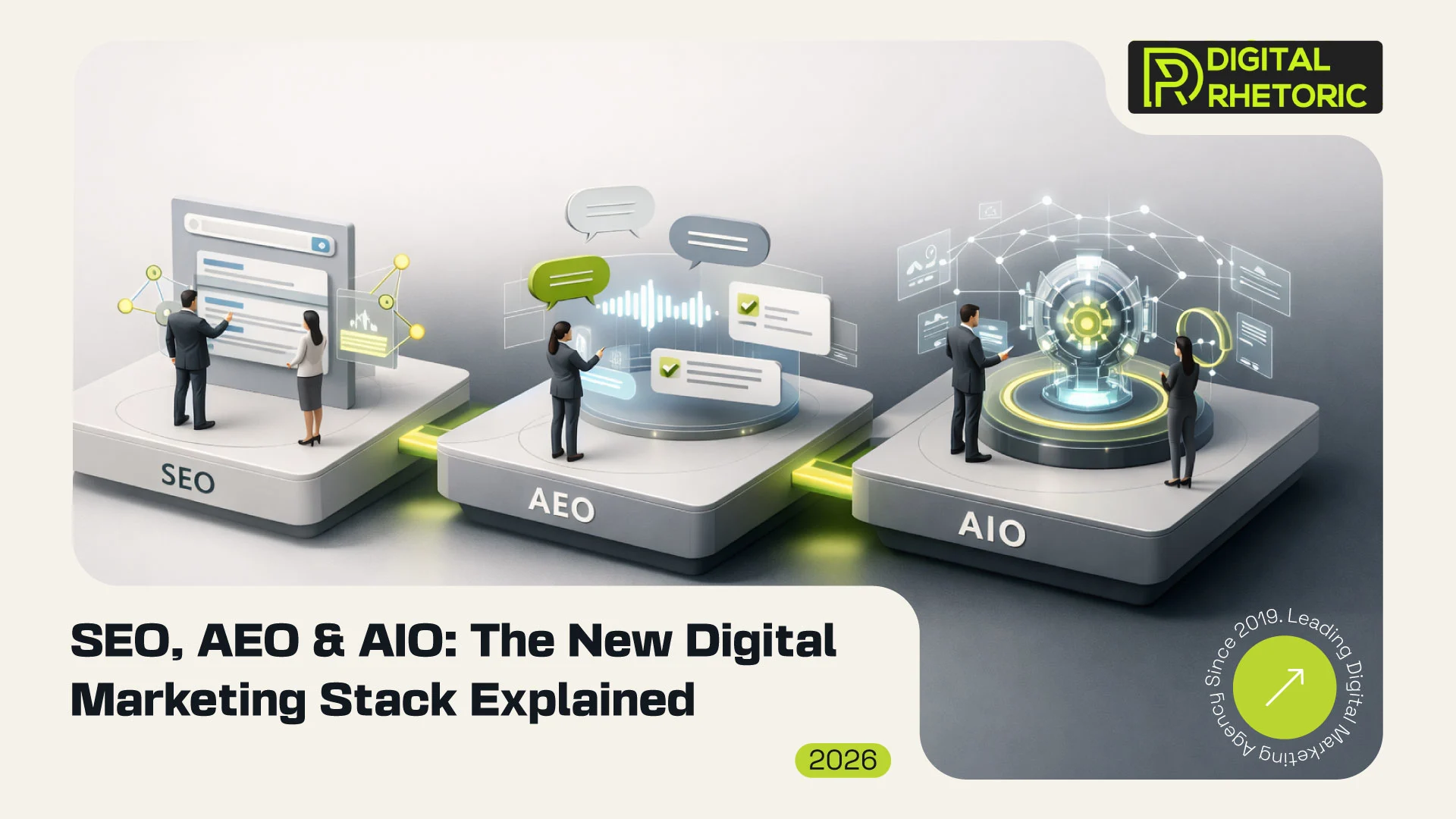
This article explains SEO, AEO, and AIO as a unified marketing stack.
You will understand how these layers work together, why they shape the future of digital marketing, and how AI driven SEO changes strategy execution.
If your growth depends on sustainable visibility, this stack matters now.
What Are SEO, AEO, and AIO?
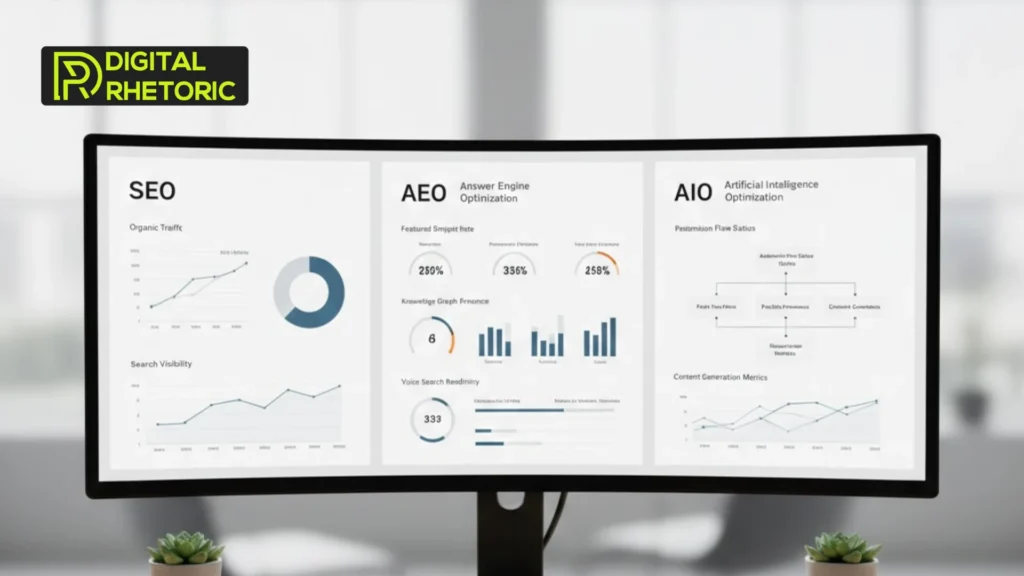
SEO, AEO, and AIO represent three layers of modern digital marketing optimization.
Each layer serves a distinct role.
-
- SEO (Search Engine Optimization): Builds discoverability and authority
-
- AEO (Answer Engine Optimization): Optimizes content for direct answers
-
- AIO (AI Optimization): Continuously improves decisions using AI
Together, they form a complete system.
Why the SEO–AEO–AIO Stack Matters
Modern discovery relies on how content is ranked, extracted, and optimized dynamically.
No single layer covers all needs.
This stack matters because:
-
- Search engines evaluate experience and intent
-
- AI systems summarize and recommend content
-
- Optimization now happens continuously
Relying on SEO alone limits reach.
How SEO Fits Into the New Stack
SEO provides the foundation for visibility and trust.
It ensures content can be found and indexed.
SEO still focuses on:
-
- Technical performance
-
- Keyword intent
-
- Content quality and authority
Without SEO, AEO and AIO lack reliable inputs.
What Role Does AEO Play?
How does AEO change content strategy?
AEO optimizes content for direct answers and summaries.
It helps platforms extract information easily.
AEO focuses on:
-
- Clear question-based headings
-
- Concise, direct explanations
-
- Structured formatting
This improves visibility in answer-driven environments.
How AIO Completes the Stack
What does AIO optimize that SEO and AEO cannot?
AIO continuously improves marketing decisions using AI insights.
It adapts in real time.
AIO supports:
-
- Dynamic content prioritization
-
- Predictive performance optimization
-
- Automated learning from user behavior
This makes optimization responsive, not reactive.
Benefits of Using SEO, AEO, and AIO Together
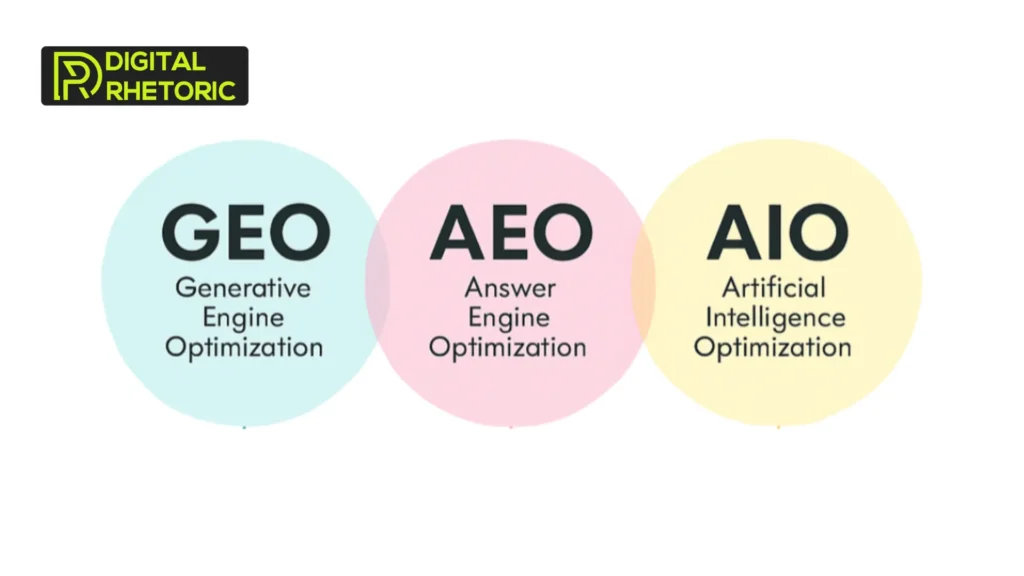
An integrated stack delivers stronger, more resilient performance.
Each layer amplifies the others.
Key benefits include:
-
- Broader visibility across discovery formats
-
- Faster adaptation to algorithm changes
-
- Higher relevance for users
-
- More predictable outcomes
This alignment supports long-term growth.
SEO AEO AIO in an AI-Driven Search Environment
AI-driven search systems evaluate clarity, authority, and outcomes together.
They do not separate tactics.
For example, when platforms generate summaries or recommendations, they often pull from pages that rank well, answer questions clearly, and show strong engagement signals.
This is where SEO AEO AIO work best as a unit.
The result is content that ranks, answers, and adapts.
Step-by-Step: Building the New Digital Marketing Stack
Step 1: Strengthen SEO Foundations
SEO remains the entry point for discovery.
Focus on:
-
- Technical health
-
- Intent-based content
-
- Topical authority
This ensures visibility.
Step 2: Apply AEO to Key Content
AEO improves extractability and clarity.
Enhance priority pages with:
-
- FAQ-style sections
-
- Clear definitions
-
- Structured explanations
This supports answer-based discovery.
Step 3: Introduce AIO for Continuous Optimization
AIO improves decisions at scale.
Implement:
-
- AI-driven performance insights
-
- Automated testing and learning
-
- Outcome-focused optimization
This keeps strategy adaptive.

Mini Case Study: Stack-Based Optimization in Practice
A B2B technology brand invests heavily in SEO.
Traffic grows, but engagement plateaus.
The strategy evolves.
Changes include:
-
- Adding AEO-focused content sections
-
- Improving clarity for direct answers
-
- Using AIO to optimize content and campaigns
Results show better engagement, steadier leads, and faster optimization cycles.
The stack works together, not in isolation.
Common Mistakes When Adopting the New Stack
Many businesses misapply these concepts.
Common mistakes include:
-
- Treating AEO as a replacement for SEO
-
- Expecting AIO to work without clean data
-
- Over-optimizing without user focus
Integration matters more than tools.
Conclusion
Digital marketing no longer runs on a single discipline.
SEO builds discoverability.
AEO improves answer visibility.
AIO enables continuous optimization.
Together, they define the future of digital marketing.
Understanding SEO AEO AIO as a unified stack helps businesses adapt to AI-driven evaluation and discovery.
This approach supports relevance, speed, and performance together.
Digital Rhetoric operates as an AI-first SEO and performance partner.
We help brands design and implement this modern stack with clarity and purpose.
If your marketing feels busy but underperforming, the stack needs alignment.
Book a digital marketing stack audit with Digital Rhetoric and prepare for what comes next.