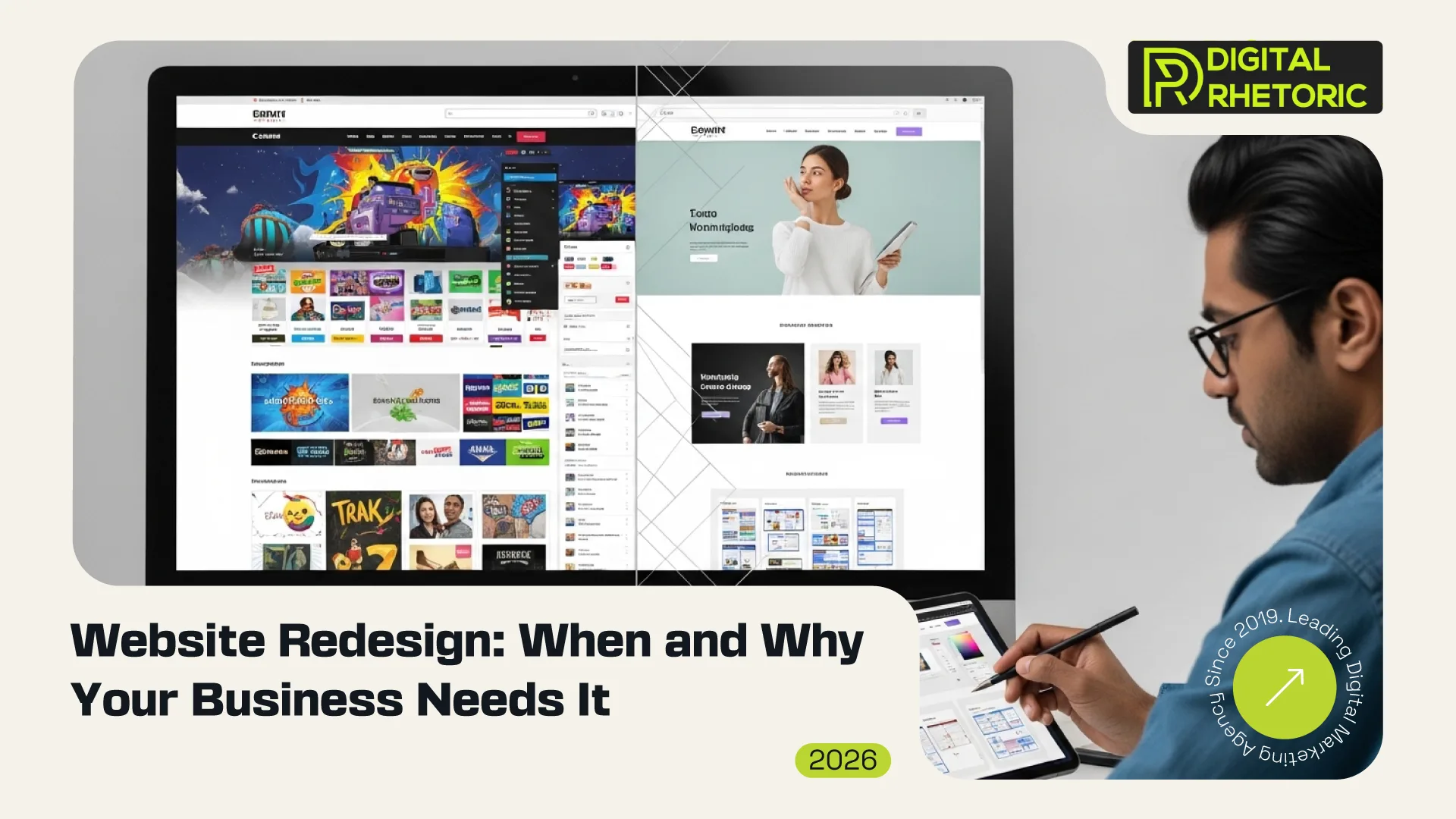
Your website still “works.”
It loads.
It shows your services.
It even gets some traffic.
But something feels off.
Leads are inconsistent. Visitors drop off quickly. Your competitors seem to convert better with similar offerings.
This is where many businesses get stuck.
They assume the problem is traffic. So they invest more in ads, SEO, and social media. Traffic increases—but conversions do not.
The real issue often lies in the website itself.
In 2026, user expectations are higher than ever. People expect speed, clarity, and seamless experiences. If your website feels outdated, confusing, or slow, users leave within seconds.
This is why understanding when to redesign website becomes critical.
A redesign is not just about visuals. It is about performance, user experience, and conversion.
In this article, we break down the signs your website needs redesign, the website redesign benefits, and how to approach a redesign that actually drives business results.
What Is a Website Redesign?
A website redesign is the process of improving a website’s structure, design, performance, and content to achieve better business outcomes.
It goes beyond aesthetics.
A redesign typically includes:
- Updated design and layout
- Improved user experience
- Faster performance
- Conversion-focused structure
The goal is to improve results, not just appearance.

Why Website Redesign Matters
An outdated website limits growth, even if your marketing is strong.
Your website acts as the final decision point.
It matters because:
- It shapes first impressions
- It affects conversion rates
- It supports all marketing channels
A weak website reduces overall ROI.
Key Website Redesign Benefits
A well-executed redesign improves performance across all metrics.
It transforms how users interact with your brand.
Major benefits include:
- Higher conversion rates
- Improved user experience
- Faster loading speeds
- Better search visibility
These benefits directly impact revenue.
Signs Your Website Needs Redesign
Outdated Design and User Experience
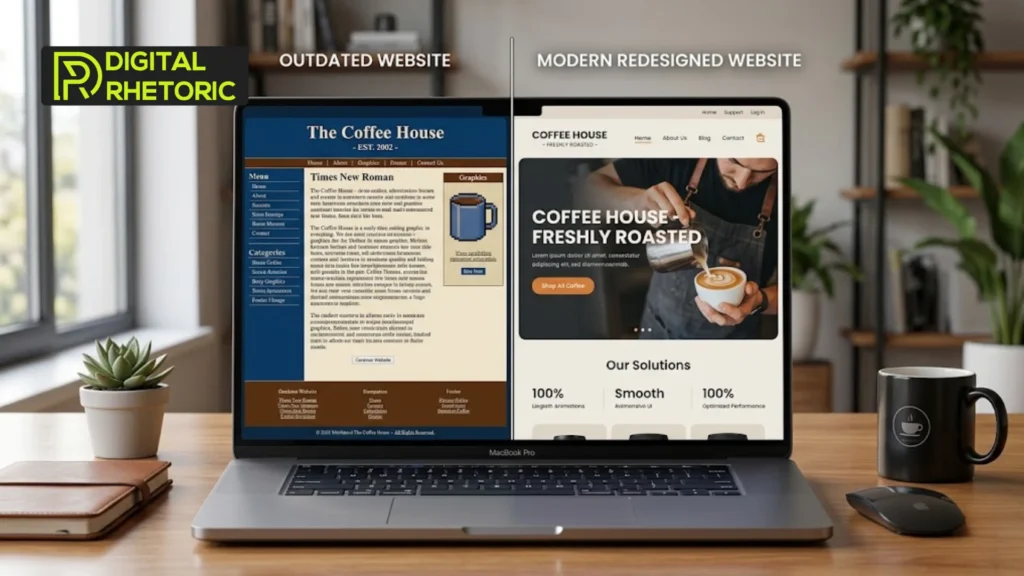
If your website looks old or feels difficult to use, users lose trust quickly.
Modern users expect simplicity and clarity.
Common signs include:
- Cluttered layout
- Poor mobile responsiveness
- Confusing navigation
Outdated design drives users away.

Low Conversion Rates
Traffic without conversions is a strong indicator of a problem.
Visitors are not taking action.
This often happens due to:
- Weak call-to-actions
- Unclear messaging
- Poor landing page structure
Low conversions signal the need for change.
Slow Loading Speed
A slow website increases bounce rates and reduces engagement.
Users expect fast performance.
Performance issues include:
- Long page load times
- Heavy images and scripts
- Poor hosting infrastructure
Speed directly affects conversions.
Not Aligned With Business Goals
If your website does not support your current goals, it becomes ineffective.
Businesses evolve, but websites often do not.
Misalignment appears as:
- Outdated service information
- Irrelevant content
- Lack of lead generation features
Your website must match your strategy.
Mini Case Study: Redesign Improves Lead Flow
A B2B service company generates consistent traffic but struggles with conversions.
The website looks outdated and lacks clear structure.
The business invests in a redesign.
Key improvements include:
- Simplified navigation and messaging
- Mobile-first design
- Strong call-to-action placement
Within months, results improve.
Lead inquiries increase significantly without additional traffic. The redesign unlocks the website’s true potential.
Steps to Redesign Your Website Effectively
Step 1: Identify Current Performance Gaps
Start by understanding what is not working.
Data reveals the problem areas.
Analyze:
- Bounce rates
- Conversion rates
- User behavior
Insights guide the redesign process.
Step 2: Define Clear Objectives
A redesign must have clear goals to succeed.
Without direction, results remain inconsistent.
Common objectives include:
- Increasing leads
- Improving user experience
- Enhancing brand perception
Clear goals drive better outcomes.
Step 3: Focus on User Experience First
User experience should guide every design decision.
A good experience increases engagement.
Focus on:
- Simple navigation
- Fast loading speed
- Mobile optimization
Better UX improves conversions.
Step 4: Build for Conversion
Your website should actively guide users toward action.
Every page must have a purpose.
Key elements include:
- Clear CTAs
- Optimized landing pages
- Trust-building content
Conversion-focused design delivers results.
Step 5: Continuously Optimize After Launch
A redesign is not a one-time activity.
Performance must be monitored and improved.
Ongoing optimization includes:
- A/B testing
- Performance tracking
- Content updates
Continuous improvement ensures long-term success.
Conclusion
A website is not a static asset.
It must evolve with your business, your audience, and digital expectations. Recognizing the signs your website needs redesign allows businesses to fix underlying issues that limit growth.
The website redesign benefits go beyond design. They improve performance, user experience, and lead generation.
Understanding when to redesign website ensures you do not waste marketing efforts driving traffic to an underperforming platform.
In a digital environment where user attention is limited, your website must work harder and smarter.
Digital Rhetoric operates as an AI-first SEO and performance partner, helping businesses redesign websites that drive measurable results.
If your website looks fine but does not convert, it is time to rethink its role.
Request a website performance audit with Digital Rhetoric and discover how a strategic redesign can unlock real business growth.