
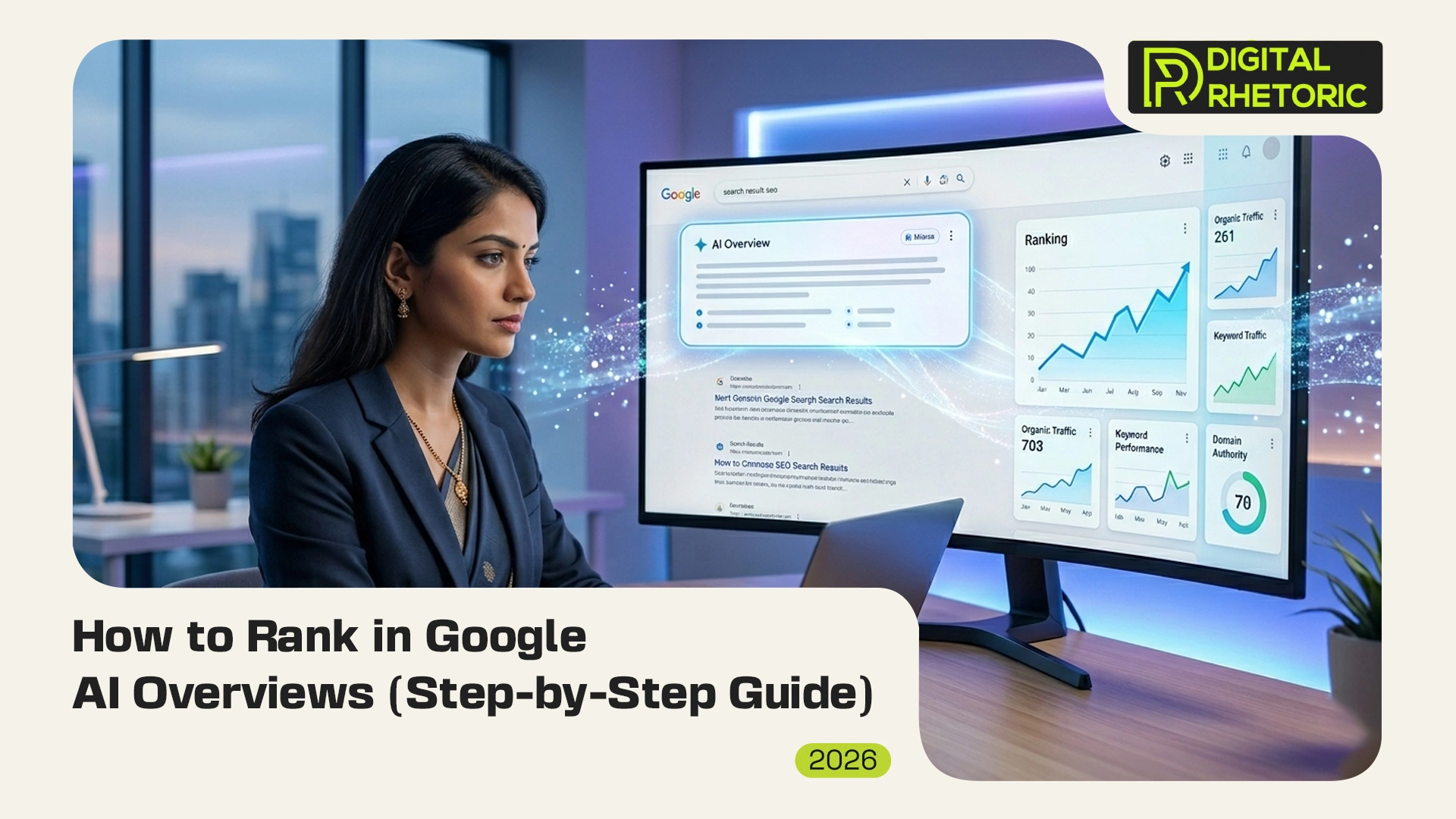
For years, SEO teams chased one goal: rank at the top of Google search results.
That strategy still matters, but search behavior changes quickly.
Today, many users never even reach traditional search listings. Instead, they see AI-generated summaries at the top of results pages that answer questions instantly. Businesses now compete not only for rankings but also for inclusion inside these AI-generated responses.
This shift creates a new challenge.
You might rank on page one and still lose visibility if your content never appears in AI-generated summaries. A business can create quality content, build backlinks, and follow traditional SEO practices yet still miss opportunities because AI systems evaluate content differently.
This changes how optimization works.
Businesses increasingly ask questions such as: How do I appear in AI search summaries? or How do I optimize content for AI search?
The answer involves structure, clarity, authority, and intent.
In this guide, we explain how to rank in Google AI overview, share practical SEO for AI search results, and show how businesses can optimize content for AI search visibility step by step.
What Are Google AI Overviews?
Google AI Overviews are AI-generated summaries that appear directly in search results and provide users with immediate answers.
Instead of only showing links, Google summarizes information.
These summaries often include:
- multiple source references
- direct explanations
- recommendations
- structured answers
Content selection works differently than traditional rankings.

Why AI Overviews Matter
AI summaries increasingly become the first thing users see.
That changes visibility.
Businesses appearing inside AI summaries can gain:
- higher visibility
- stronger authority
- increased clicks
- improved brand recognition
Placement matters.
Benefits of Ranking in AI Search Results
Ranking within AI search experiences creates advantages beyond traditional traffic.
Benefits include:
- stronger content visibility
- increased trust
- higher brand exposure
- improved discovery opportunities
Visibility now extends beyond rankings.
How to Rank in Google AI Overview
Content appearing in AI-generated summaries usually answers questions clearly, demonstrates expertise, and organizes information effectively.
The process requires strategic optimization.
Step 1: Answer Questions Directly
AI systems favor clear, immediate responses.
Start sections with concise answers.
Examples:
Question: How does SEO improve rankings?
Answer:
“SEO improves rankings by helping search engines understand content relevance and authority.”
Then expand afterward.
This structure helps extraction.
Step 2: Use FAQ-Based Content
AI systems frequently identify structured question-and-answer formats.
Helpful FAQ examples:
- What is AI search optimization?
- How does AI search work?
- Why do AI summaries matter?
Question formatting improves readability.

Step 3: Build Topical Authority
Single articles rarely create strong AI visibility.
Content ecosystems perform better.
Build connected content around:
- related topics
- industry clusters
- supporting articles
Authority compounds over time.
Step 4: Prioritize Factual Clarity
AI systems prefer content with high informational value.
Include:
- examples
- data points
- practical explanations
- expert insights
Useful content performs better.
Step 5: Improve Content Structure
AI systems scan content differently than people.
Use:
- H2 headings
- H3 sections
- bullets
- numbered steps
Structured information improves extraction.
Step 6: Strengthen Trust Signals
Authority increasingly influences AI visibility.
Strengthen:
- author credibility
- citations
- reviews
- expertise indicators
Trust matters.
Mini Case Study: AI Visibility Through Structure
A software company publishes extensive articles covering marketing automation.
Traffic remains stable.
However, AI-generated search summaries rarely reference the content.
The company changes formatting.
Updates include:
- adding FAQ sections
- using direct answer blocks
- improving heading structure
- simplifying explanations
Within months, AI visibility improves.
Traditional rankings remain similar.
Content organization creates the difference.
SEO for AI Search Results: Practical Checklist
Businesses optimizing for AI search should focus on clarity rather than keyword density.
Quick checklist:
✓ Write concise answers first
✓ Create FAQ sections
✓ Use structured headings
✓ Build topical authority
✓ Improve factual density
✓ simplify language
✓ answer real user questions
Optimization becomes more intent-driven.

Conclusion
The future of search increasingly shifts from link discovery toward answer delivery.
Businesses that understand how to rank in Google AI overview gain an advantage because visibility now depends on more than rankings alone.
Strong SEO for AI search results focuses on clarity, authority, and content usefulness. Businesses that continue relying only on traditional SEO tactics risk missing growing opportunities.
Search evolves quickly.
Digital Rhetoric operates as an AI-first SEO and performance partner, helping brands build content systems designed for traditional rankings and emerging AI visibility.
Want to know whether your content is ready for AI search?
Book an AI search visibility audit with Digital Rhetoric and discover how your business can optimize content for the next generation of search.