Digital advertising is changing faster than most businesses expect.
In the past, marketers manually adjusted bids, wrote multiple ad variations, and monitored campaign performance every day. Campaign success depended heavily on human optimization.
Today, advertising platforms increasingly rely on artificial intelligence.
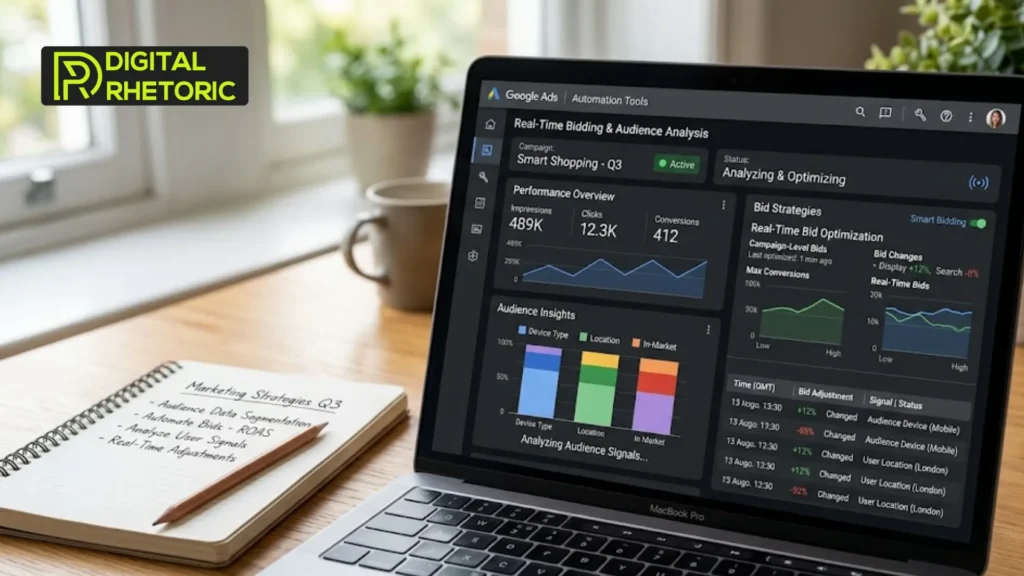
Automation now drives many of the most important decisions inside Google Ads. Algorithms adjust bids in real time, test ad variations automatically, and predict which users are most likely to convert.
This shift creates both opportunities and challenges.
Businesses that understand how AI-powered tools work can improve efficiency, reduce wasted ad spend, and achieve stronger ROI. At the same time, companies that rely on outdated PPC strategies often struggle to compete.
New technologies such as Performance Max campaigns, Smart Bidding, predictive analytics, and automated ad testing are redefining how advertisers run campaigns.
In this article, we explore how AI and automation are transforming Google Ads. You will learn practical best practices that help businesses maximize performance in 2026 while maintaining strategic control over their campaigns.
What Is AI Automation in Google Ads?
AI automation in Google Ads uses machine learning algorithms to optimize campaigns, bids, and targeting in real time.
Instead of manual adjustments, the system continuously analyzes data to improve performance.
Key automation capabilities include:
- Automated bid adjustments
- Predictive audience targeting
- Automated ad testing and optimization
- Real-time performance analysis
These tools help marketers focus more on strategy rather than repetitive tasks.
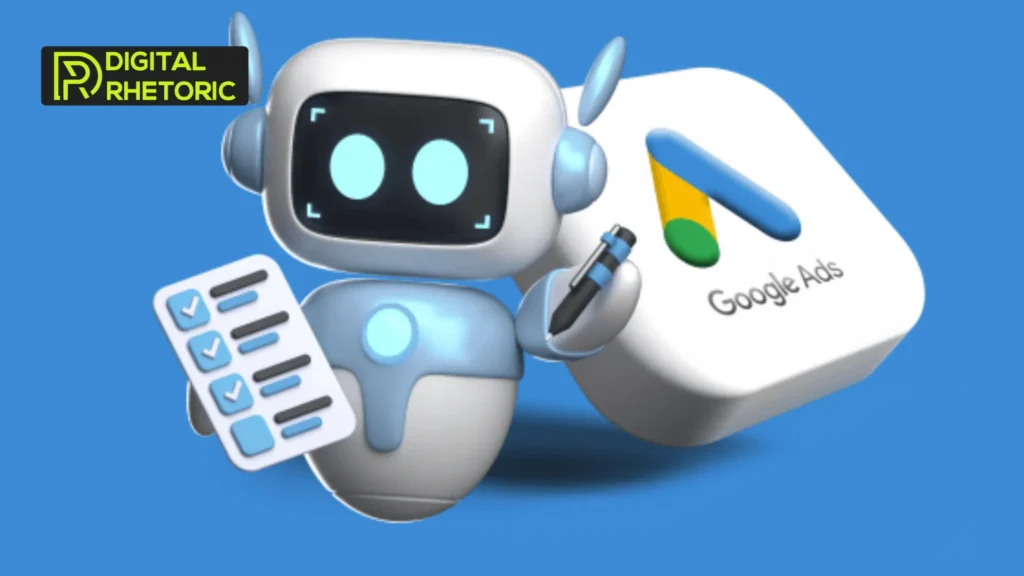
Why AI-Driven Advertising Matters in 2026
Modern digital advertising platforms process enormous amounts of user data. AI helps translate this data into actionable campaign improvements.
Without automation, managing campaigns efficiently becomes extremely difficult.
AI-driven Google Ads campaigns matter because they:
- Optimize bids in real time
- Identify high-converting audiences faster
- Reduce manual campaign management
- Improve overall return on ad spend
Businesses that adopt AI-powered PPC strategies often outperform competitors using traditional methods.
Benefits of AI & Automation in Google Ads
AI-driven campaign management improves efficiency, targeting accuracy, and campaign scalability.
These benefits help businesses achieve stronger marketing performance.
Major advantages include:
- Faster optimization of ad campaigns
- Better targeting using behavioral data
- Improved conversion prediction
- Reduced manual workload for marketers
Automation also allows teams to test strategies at scale.
Best AI-Powered Google Ads Strategies for 2026
Performance Max Campaigns
Performance Max campaigns use AI to run ads across all Google channels from a single campaign.
These channels include Search, Display, YouTube, Gmail, and Discover.
Key advantages include:
- Unified campaign management
- Cross-channel optimization
- Automated targeting based on user behavior
Performance Max helps advertisers reach customers across multiple platforms simultaneously.
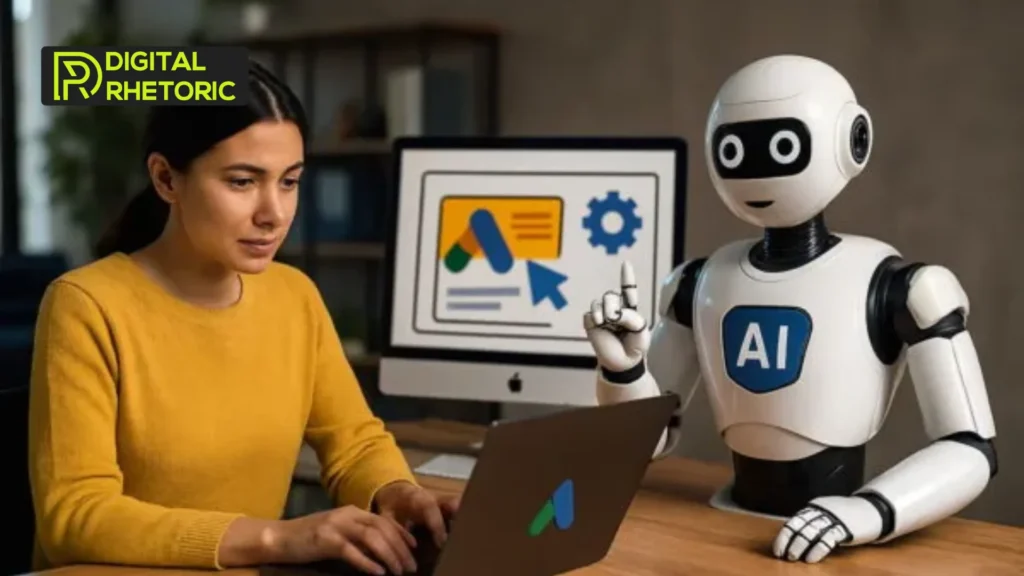
Smart Bidding
Smart Bidding uses machine learning to automatically adjust bids based on conversion probability.
It evaluates multiple signals in real time.
Signals analyzed include:
- User device
- Location
- Time of day
- Past behavior
Smart Bidding strategies commonly include:
- Target CPA
- Target ROAS
- Maximize conversions
These strategies help improve campaign efficiency.
Predictive Analytics
Predictive analytics helps advertisers anticipate future customer behavior.
AI models analyze historical data to forecast likely outcomes.
Predictive insights help marketers:
- Identify high-value audience segments
- Adjust budget allocation proactively
- Forecast campaign performance
This allows businesses to make smarter advertising decisions.
Automated Ad Testing
Automated ad testing allows Google Ads to evaluate multiple creatives and identify top performers.
Instead of guessing which ads will work best, algorithms run experiments continuously.
Automated testing improves campaigns by:
- Testing multiple headlines and descriptions
- Identifying winning ad combinations
- Eliminating low-performing creatives
This leads to stronger click-through and conversion rates.
Mini Case Study: AI Optimization Improves PPC Performance
A mid-sized ecommerce company runs several Google Ads campaigns but struggles with rising costs.
Manual bid adjustments fail to keep up with changing competition.
The marketing team decides to adopt AI-powered campaign strategies.
Key improvements include:
- Implementing Smart Bidding for conversion optimization
- Launching Performance Max campaigns
- Using automated ad testing for creatives
Within a few months, the company sees measurable improvements:
- Lower cost per acquisition
- Higher conversion rates
- Better budget efficiency
The shift to AI-driven optimization transforms campaign performance.
Steps to Implement AI Automation in Google Ads
Step 1: Structure Campaign Data Properly
AI systems perform best when they receive accurate data signals.
Important setup steps include:
- Conversion tracking implementation
- Clear campaign goals
- Accurate audience segmentation
Clean data improves automation accuracy.
Step 2: Allow Algorithms Time to Learn
AI optimization requires a learning period before delivering optimal results.
During this phase:
- Avoid frequent campaign changes
- Allow algorithms to collect performance data
- Monitor but do not interrupt learning cycles
Patience improves automation outcomes.
Step 3: Combine Automation With Strategic Oversight
AI improves efficiency but still requires human guidance.
Marketers must:
- Define campaign goals
- Monitor overall performance
- Adjust creative strategy
Human insight remains essential.
Conclusion
AI and automation are redefining how digital advertising works.
Modern Google Ads campaigns increasingly rely on machine learning to optimize bids, targeting, and ad creatives. Businesses that understand these technologies gain a significant advantage.
Tools such as Performance Max campaigns, Smart Bidding, predictive analytics, and automated ad testing allow marketers to improve efficiency while scaling campaigns.
However, automation does not replace strategy.
The most successful campaigns combine AI-powered optimization with thoughtful marketing planning.
Digital Rhetoric operates as an AI-first SEO and performance partner, helping businesses implement advanced PPC strategies that maximize ROI.
If your advertising campaigns feel complex, inefficient, or unpredictable, it may be time for a smarter approach.
Request a Google Ads performance audit from Digital Rhetoric and discover how AI-driven advertising can transform your PPC results.