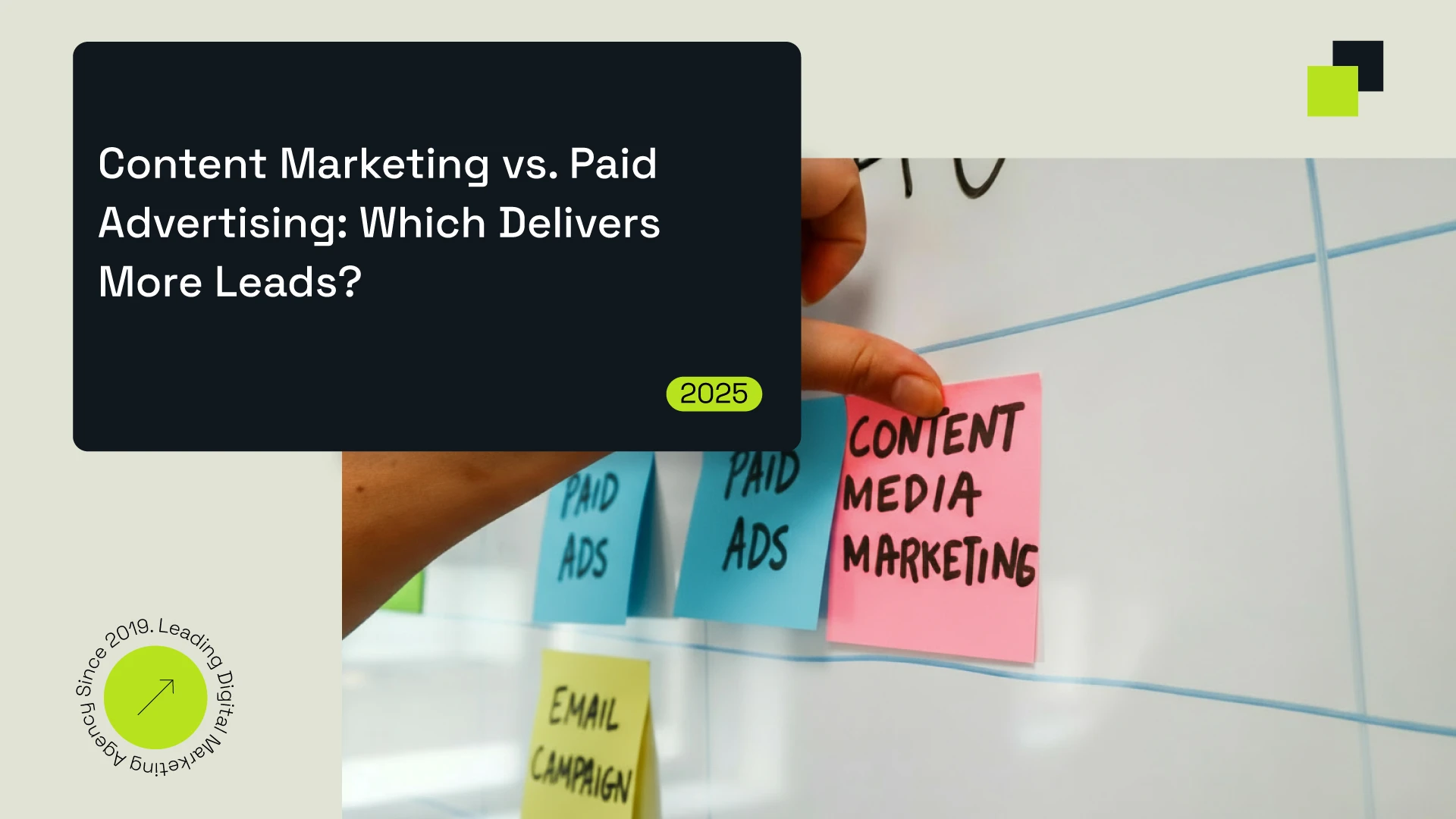
Do you want more leads but aren’t sure whether to invest in content marketing or paid ads? You’re not the only one. Many businesses face this question while planning growth strategies. Both methods promise results, but they work differently.
Content marketing builds trust and long-term value. Paid advertising provides speed and instant reach. The real challenge lies in choosing what aligns with your goals, budget, and audience behavior.
In this blog, we’ll break down the differences between content marketing and paid advertising, highlight their strengths, and explain how each impacts lead generation. By the end, you’ll know which strategy or combination works finest for your business.

What Is Content Marketing?
Content marketing linchpins on generating useful and engaging content to attract customers.
Examples include:
- Blogs and articles
- SEO-optimized website pages
- Videos and reels
- Case studies and ebooks
It works by building trust, authority, and organic search rankings over time.
What Is Paid Advertising?
Paid advertising encourages content directly to target audiences using paid platforms.
Popular channels include:
- Google Ads
- Facebook and Instagram Ads
- LinkedIn Ads
- Display advertising
It delivers instant visibility but requires consistent investment.

Why the Comparison Matters
Selecting between content marketing vs paid ads directly affects lead quality, cost per lead, and long-term ROI.
- Content = sustainable growth
- Paid Ads = fast results
The right balance can transmute your lead generation strategies.
Advantages of Content Marketing
- Long-term ROI: Content remains online and keeps attracting traffic.
- Credibility: Builds brand authority with informative and reliable content.
- Lower cost over time: SEO-driven traffic decreases dependency on ad spend.
- Better engagement: Content drives discussions, shares, and repeat visits.
- Compounding returns: Previous content continues to generate leads.
Case Study: HubSpot reports that businesses publishing 16+ blogs monthly see 3.5x more traffic than those posting fewer.

Benefits of Paid Advertising
- Instant reach: Ads show up instantly to target audiences.
- Precise targeting: Filter by demographics, interests, and location.
- Scalability: Augment budget to expand reach instantly.
- Fast testing: Swiftly test offers, products, or messages.
- Measurable ROI: Platforms dispense clear analytics for performance tracking.
Which Delivers Better Leads?
- Content Marketing Leads: Often warmer, as they come from organic searches or priceless resources.
- Paid Ads Leads: Faster, but sometimes less qualified if targeting isn’t upgraded.
Best practice: Use content to nurture and ads to capture attention. Jointly, they maximize conversions.
FAQs
Q1: Is content marketing cheaper than paid ads?
Yes, in the long run. Paid ads need continuing spend, while content builds sustainable results.
Q2: Should small businesses choose ads or content?
Start with ads for swift traction, then invest in content for long-term growth.
Q3: Can both be used together?
Absolutely. Many accomplished digital advertising comparisons show the hybrid model works best.
Conclusion
Content marketing and paid ads function as different roles in lead generation strategies. Content builds trust and authority. Ads deliver quick visibility.
The smartest approach is a balanced strategy using paid ads for immediate results and content marketing for sustainable growth.
At Digital Rhetoric, we specialize in designing ROI-driven marketing solutions that merge both strategies effectively.
Ready to scale your leads? Contact us today to discover the perfect blend for your business growth