
Not long ago, achieving a first-page Google ranking was the primary goal of most SEO strategies. Businesses invested in keyword research, backlinks, technical optimization, and content creation because higher rankings typically meant more traffic and more opportunities to generate leads.
That reality is changing rapidly.
Google AI Overviews now provide users with direct, AI-generated answers at the top of many search results. Instead of browsing multiple websites, users often receive summarized information instantly. In some cases, they find what they need without clicking any result at all.
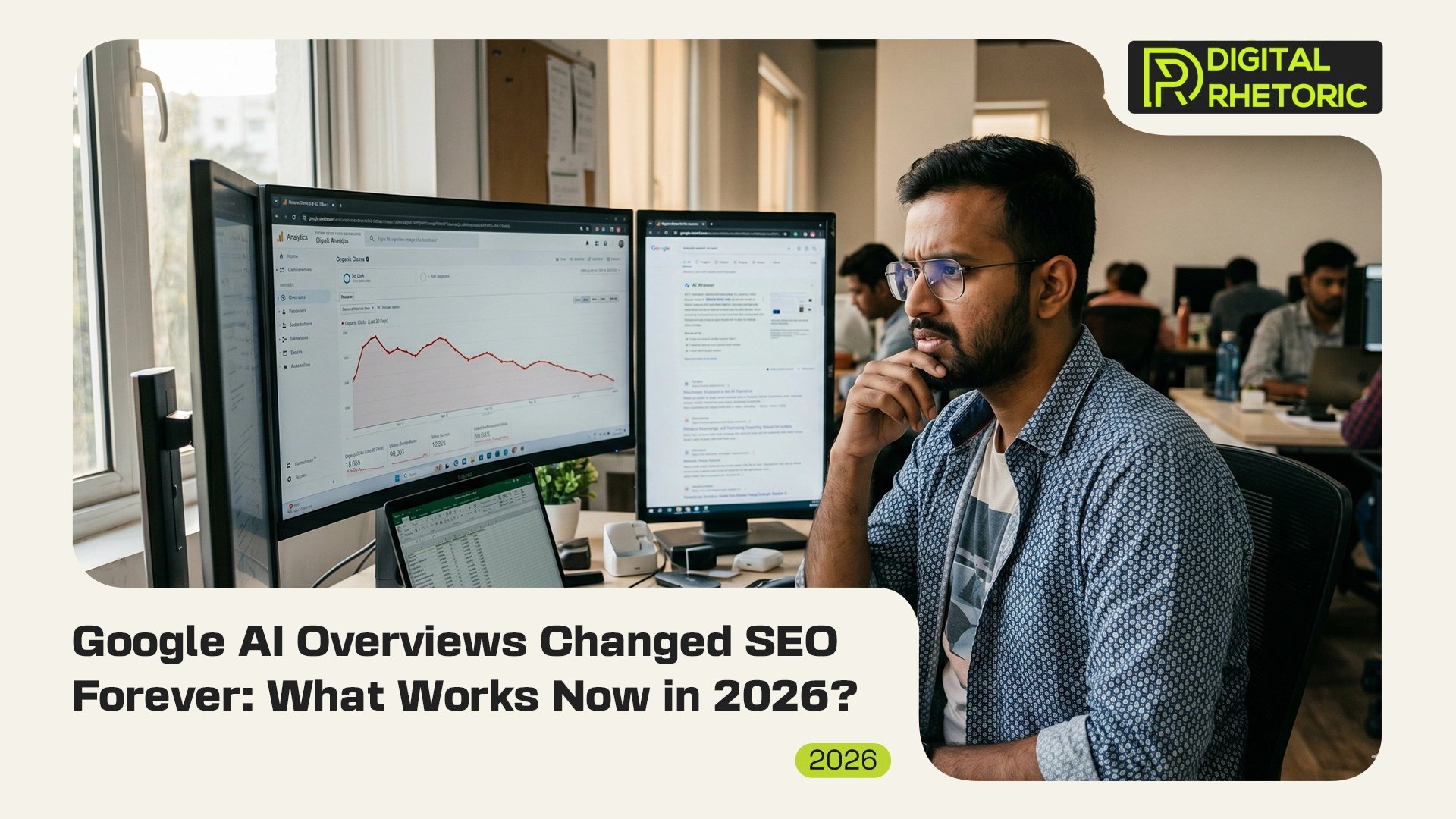
This shift creates concern for businesses that rely heavily on organic traffic. Many marketers notice stable rankings but declining click-through rates. Others wonder whether traditional SEO still matters in a search environment increasingly powered by artificial intelligence.
The truth is that SEO remains critical, but the rules of visibility are evolving. Businesses that adapt to AI-driven search experiences can still grow traffic, authority, and leads. Those that continue using outdated tactics may struggle to remain visible.
In this guide, you’ll learn how Google AI Overviews affect SEO, discover what drives visibility today, and explore practical AI overview optimization tips that help businesses compete successfully in 2026.
What Are Google AI Overviews?
Google AI Overviews are AI-generated summaries that appear directly within search results and answer user questions using information from multiple sources.
Instead of displaying only traditional links, Google often presents a synthesized response before the organic listings.
AI Overviews typically:
- Answer informational questions
- Summarize multiple sources
- Highlight key insights
- Link to supporting websites
- Reduce the need for additional searches
This creates a new layer of competition for visibility.
How Google AI Overviews Affect SEO
Google AI Overviews change how users interact with search results and how websites earn visibility.
Ranking well still matters, but visibility increasingly depends on whether your content contributes to AI-generated answers.
Key changes include:
- Lower click-through rates for some informational searches
- Increased importance of content authority
- Greater emphasis on content clarity
- More competition for citations and mentions
- Stronger focus on expertise and trust
Businesses now compete not only for rankings but also for inclusion in AI-generated responses.

Why Is This Important for Businesses?
AI Overviews influence what users see first, making them a major factor in online visibility.
Being included in these summaries can improve exposure even when traditional clicks decline.
Benefits of adapting include:
- Increased brand awareness
- More authority within your niche
- Higher trust signals
- Better visibility across AI-powered search experiences
- Improved lead quality from informed users
Visibility now extends beyond rankings alone.
What Works in SEO After AI Overviews?
The most successful SEO strategies focus on becoming a trusted source of information rather than simply targeting keywords.
Search engines increasingly reward expertise, accuracy, and content quality.
Successful approaches include:
Create Direct Answers
AI systems prefer content that clearly answers user questions.
Use:
- Definitions
- FAQs
- Step-by-step explanations
- Summary sections
Direct answers improve content extractability.
Build Topical Authority
Publishing isolated articles is no longer enough.
Instead:
- Create content clusters
- Cover topics comprehensively
- Answer related questions
- Demonstrate subject expertise
Authority increases citation potential.
Improve Content Structure
Structured content is easier for AI systems to understand.
Use:
- Clear headings
- Bullet points
- Tables
- FAQ sections
- Logical organization
Well-structured content performs better in AI-driven search environments.
Strengthen E-E-A-T Signals
Experience, Expertise, Authoritativeness, and Trustworthiness remain essential.
Improve trust by including:
- Author information
- Case studies
- Original insights
- Expert commentary
- Customer success stories
Trust helps search engines identify reliable sources.

AI Overview Optimization Tips
Optimizing for AI Overviews means making your content easier to understand, trust, and reference.
Practical actions include:
Focus on User Intent
Understand exactly what users want to know.
Create content that:
- Solves problems
- Answers questions
- Provides actionable guidance
Intent-focused content aligns better with AI-generated answers.
Use Structured Data
Schema markup helps search engines understand content context.
Consider implementing:
- FAQ schema
- Article schema
- Organization schema
- Product schema
Structured data improves content interpretation.
Publish Original Insights
AI systems increasingly value unique information.
Examples include:
- Industry research
- Customer data
- Case studies
- Expert opinions
Original content stands out.

Mini Case Study: Visibility Beyond Rankings
A software company noticed declining clicks despite maintaining strong keyword rankings.
Rather than focusing solely on rankings, the team:
- Expanded FAQ content
- Improved page structure
- Added schema markup
- Created detailed topic clusters
Within months, their content began appearing more frequently in AI-generated search summaries.
While overall traffic remained relatively stable, branded searches and qualified leads increased significantly.
The company gained visibility where users increasingly spend attention.
Conclusion
Google AI Overviews have fundamentally changed how users interact with search results, but they have not eliminated the value of SEO. Instead, they have raised the importance of authority, content quality, trust, and structured information.
Businesses that continue focusing solely on rankings may struggle to maintain visibility. Those that adapt by creating comprehensive, well-organized, expert-driven content position themselves for success in modern search environments.
The future belongs to brands that become trusted sources rather than simply ranking pages. By improving content structure, answering user questions clearly, and strengthening authority signals, businesses can continue earning visibility even as search evolves.
At Digital Rhetoric, we help brands build AI-ready SEO strategies that improve discoverability across traditional search results, Google AI Overviews, and emerging AI-powered search experiences.
Want to know whether your website is ready for AI-driven search? Schedule an AI SEO Performance Audit with Digital Rhetoric and uncover opportunities to improve rankings, visibility, authority, and lead generation.