
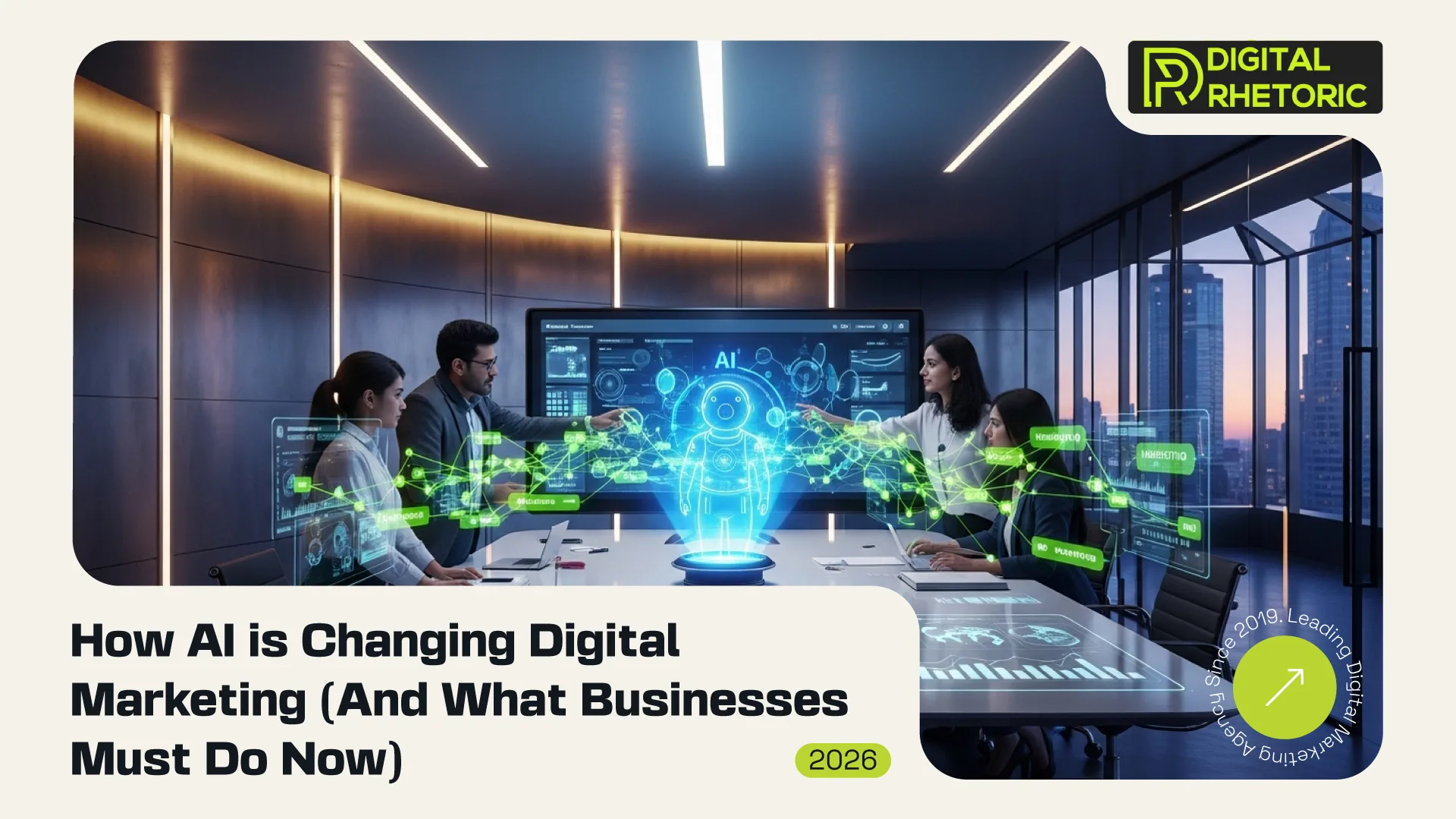
Digital marketing is no longer driven only by human decisions.
Artificial intelligence now plays a central role in how brands reach, engage, and convert customers. From personalized recommendations to automated campaigns, AI continues to reshape the entire marketing ecosystem.
The shift is not gradual anymore. It is happening fast.
Search engines understand intent better. Ad platforms optimize campaigns in real time. Content creation becomes faster and more scalable. Businesses that adapt see improved efficiency and stronger results.
Those that do not fall behind quickly.
In 2026, the conversation is no longer about whether AI will impact marketing. It is about how deeply businesses integrate AI into their strategies.
Understanding how AI is changing marketing helps companies stay competitive. It allows them to move from reactive campaigns to predictive systems.
In this article, we break down the role of AI in digital marketing, key AI marketing strategies, and what businesses must do now to stay relevant in the evolving future of digital marketing.
What Is AI in Digital Marketing?
AI in digital marketing refers to the use of machine learning and data-driven algorithms to automate, optimize, and personalize marketing efforts.
It enables smarter decision-making.
Key applications include:
- Automated campaign optimization
- Predictive audience targeting
- Content generation and personalization
- Data analysis and insights
AI enhances both speed and accuracy.
Why AI Is Changing Digital Marketing
AI transforms marketing by improving efficiency, personalization, and scalability.
It allows businesses to handle complex data more effectively.
Major changes include:
- Real-time campaign optimization
- Better understanding of customer behavior
- Increased automation across platforms
- Improved targeting accuracy
These changes redefine marketing performance.
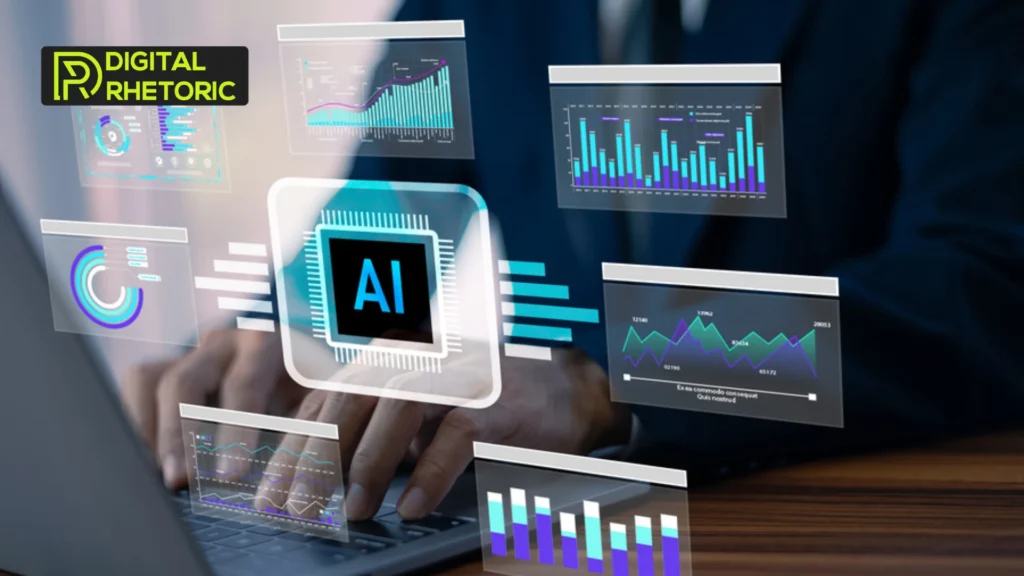
Benefits of AI in Digital Marketing
AI-driven strategies help businesses achieve better results with fewer resources.
They reduce manual effort and improve outcomes.
Key benefits include:
- Faster campaign execution
- Improved conversion rates
- More accurate audience targeting
- Better return on investment
AI allows marketers to focus on strategy.
How AI Is Transforming Marketing Strategies
Personalization at Scale
AI enables businesses to deliver personalized experiences to large audiences.
Customers receive content tailored to their needs.
Examples include:
- Personalized email campaigns
- Dynamic website content
- Targeted advertising
Personalization improves engagement and conversions.
Predictive Analytics
Predictive analytics helps businesses anticipate customer behavior.
It uses historical data to forecast outcomes.
This helps marketers:
- Identify high-value customers
- Predict buying intent
- Optimize marketing strategies
Predictive insights improve decision-making.
Automated Campaign Optimization
AI tools continuously optimize campaigns based on performance data.
Manual adjustments become less necessary.
Automation improves:
- Bid management in advertising
- Ad creative testing
- Budget allocation
Campaigns become more efficient.
Content Creation and Optimization
AI assists in generating and optimizing content for different platforms.
It speeds up production while maintaining relevance.
Content improvements include:
- SEO optimization
- Topic suggestions
- Performance analysis
AI supports scalable content strategies.
Mini Case Study: AI-Driven Marketing Growth
A mid-sized ecommerce brand struggles to manage multiple campaigns efficiently.
Manual processes slow down optimization.
The company adopts AI-powered marketing tools.
Key changes include:
- Using predictive analytics for audience targeting
- Automating ad bidding and testing
- Personalizing email campaigns
Within months, performance improves.
Conversion rates increase, and campaign costs decrease. The shift to AI-driven strategies creates measurable growth.
What Businesses Must Do Now
Adopt AI Marketing Tools
Businesses must integrate AI tools into their marketing stack to remain competitive.
These tools improve efficiency and performance.
Key tools include:
- AI-powered ad platforms
- Marketing automation software
- Data analytics tools
Adoption drives innovation.
Focus on Data Quality
AI systems depend on accurate and structured data.
Poor data leads to poor results.
To improve data quality:
- Track user behavior accurately
- Maintain clean data systems
- Use integrated analytics platforms
Good data improves outcomes.
Combine AI With Human Strategy
AI enhances marketing but does not replace human creativity and strategy.
Businesses must balance both.
Human roles include:
- Strategic planning
- Creative storytelling
- Brand positioning
This combination drives success.
Stay Agile and Adaptable
The future of digital marketing continues to evolve rapidly.
Businesses must adapt continuously.
To stay agile:
- Monitor industry trends
- Test new strategies
- Optimize regularly
Adaptability ensures long-term growth.
Conclusion
Artificial intelligence is redefining how marketing works.
The shift toward automation, personalization, and predictive insights is shaping the future of digital marketing. Businesses that embrace AI marketing strategies gain a competitive advantage through efficiency and smarter decision-making.
Understanding how AI is changing marketing allows companies to build systems that scale and adapt to evolving customer behavior.
However, success depends on balance.
AI provides tools and insights, but strategy, creativity, and execution still require human expertise.
Digital Rhetoric operates as an AI-first SEO and performance partner, helping businesses integrate AI into their marketing strategies to drive measurable growth.
If your current marketing approach feels outdated or inefficient, the time to adapt is now.
Book a digital marketing strategy consultation with Digital Rhetoric and discover how AI can transform your marketing performance.