
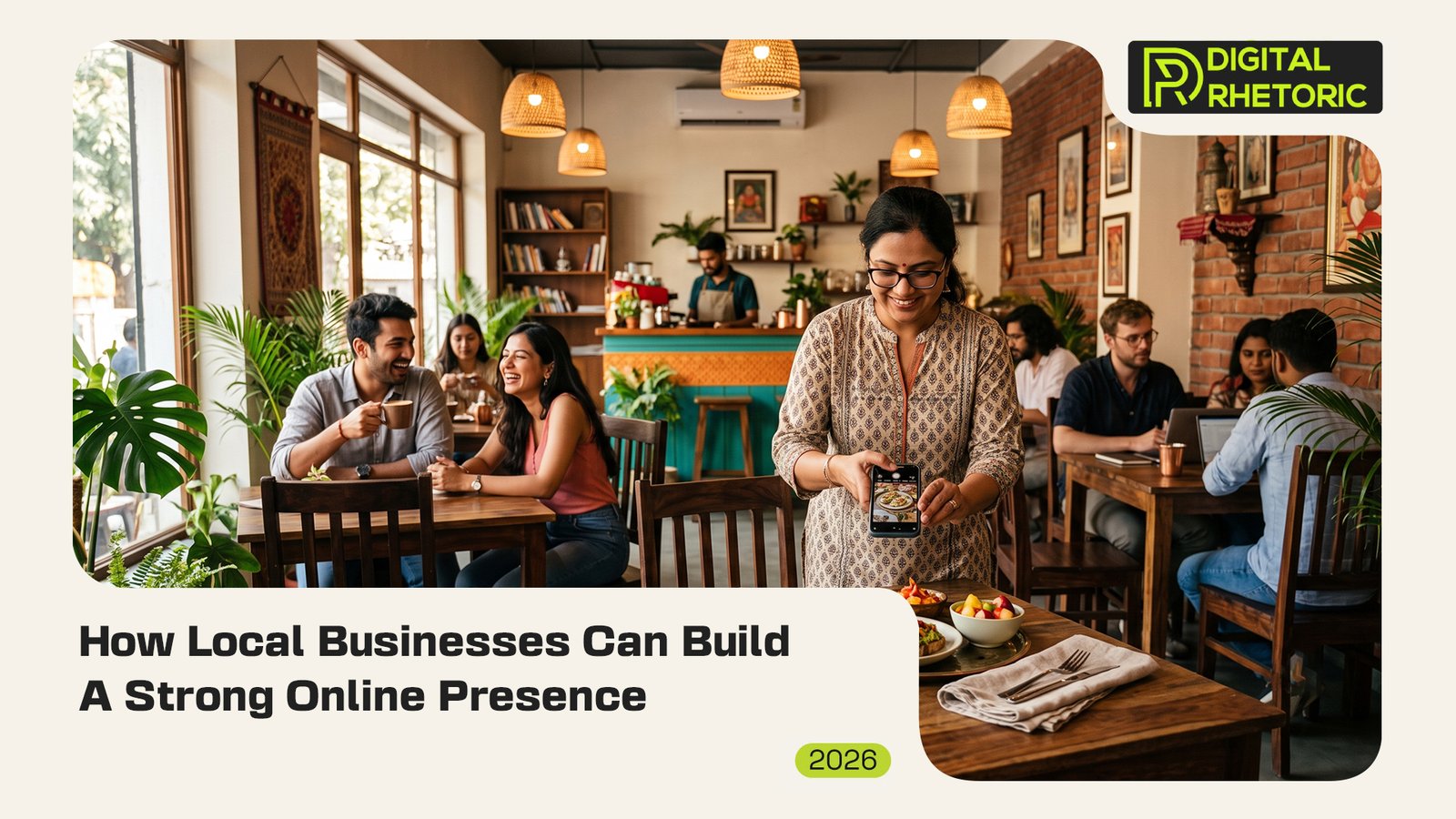
A local business can offer excellent service, have loyal customers, and maintain a strong reputation in its neighbourhood. Yet when someone searches online for exactly what that business provides, a competitor appears first.
That gap has serious consequences.
Customers increasingly discover businesses before they physically see them. They search for nearby services, compare websites, check reviews, browse social profiles, look at photographs, and ask digital assistants for recommendations. If a business is difficult to find or its information looks incomplete, potential customers can move to another option within minutes.
This makes local business marketing much more than posting regularly on social media. Businesses need a connected digital presence that helps people discover them, trust them, and take action.
Search engines and AI-powered discovery systems also rely on clear information to understand what a company offers and where it operates.
This guide explains how local businesses can strengthen business visibility online, build local brand awareness, and create a practical digital marketing system that turns local searches into enquiries and customers.
What Is a Strong Online Presence for a Local Business?
A strong online presence means customers can easily find, understand, evaluate, and contact your business across the digital channels they use.
It includes more than having a website.
A complete local online marketing presence can include:
- A professional website
- Google Business Profile
- Local SEO
- Customer reviews
- Social media profiles
- Local directory listings
- Search advertising
- Useful content
- Consistent business information
- Clear contact options
These elements work together.
Someone may discover your business through Google Maps, check Instagram for recent work, read reviews, visit your website, and finally call or WhatsApp you.
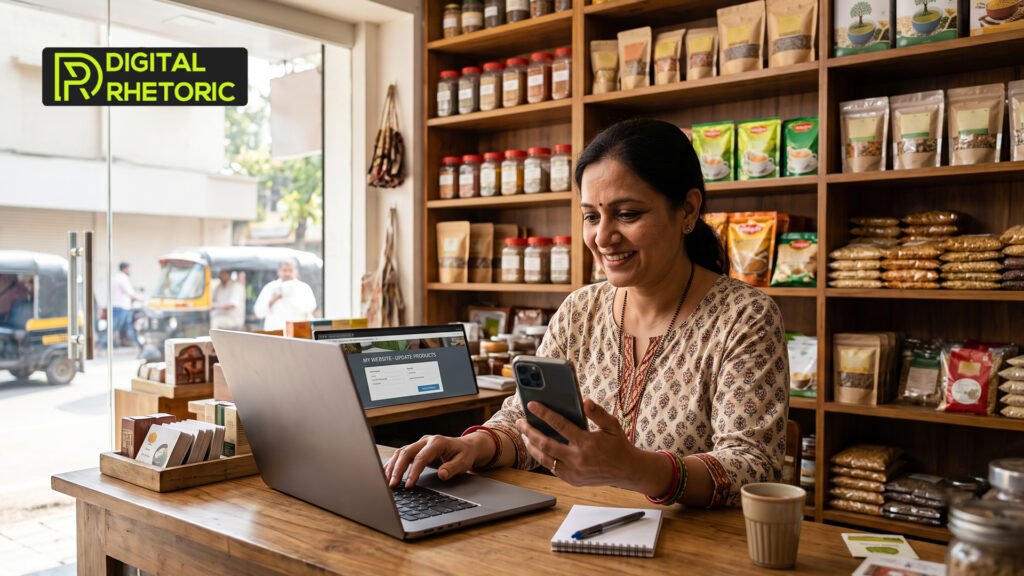
Why Does Online Visibility Matter for Local Businesses?
Online visibility helps local businesses appear at the moment nearby customers are actively looking for a product, service, or solution.
Strong visibility can help businesses:
- Reach customers beyond referrals
- Appear in local searches
- Build credibility
- Generate calls and enquiries
- Increase store visits
- Collect more reviews
- Compete with larger brands
- Stay visible outside business hours
A digital presence also allows potential customers to research your business without speaking to anyone.
Your website, reviews, photographs, services, prices, FAQs, and social content can answer questions before the first enquiry occurs.
Start With Your Google Business Profile
For many local businesses, Google Business Profile is one of the most important digital assets because it helps customers discover the business through Google Search and Maps.
Keep the profile complete and accurate.
Important information includes:
- Business name
- Primary category
- Address or service area
- Opening hours
- Phone number
- Website
- Services
- Business description
- Photographs
Update the profile when information changes.
Incorrect hours, old phone numbers, or outdated locations create friction and can damage trust.
Build a Website Designed for Local Customers
A local business website should quickly explain what the company does, where it operates, why customers should trust it, and how they can make contact.
Avoid treating the website like a digital brochure.
Every important page should guide visitors towards an action.
Useful website elements include:
- Clear service descriptions
- Location information
- Click-to-call buttons
- WhatsApp contact
- Enquiry forms
- Customer testimonials
- Reviews
- Pricing guidance where appropriate
- FAQs
- Maps and directions
Mobile performance matters because many local searches happen while people are already looking for an immediate solution.
Use Local SEO to Increase Business Visibility Online
Local SEO helps search engines understand your services, relevance, and geographic connection to potential customers.
Start by creating useful pages around the services customers actually search for.
For example, a dry-cleaning business in Mumbai can create clear information about:
- Dry cleaning
- Shoe cleaning
- Carpet cleaning
- Curtain cleaning
- Wedding garment care
- Pickup and delivery areas
Location should appear naturally where relevant.
Avoid creating dozens of nearly identical location pages simply to insert different area names. Each page should provide genuine value to customers in that location.
Build Consistent Business Information Across the Web
Consistent information makes it easier for customers and digital systems to identify your business correctly.
Your core business details should remain consistent across major online listings.
Check:
- Business name
- Address
- Phone number
- Website
- Opening hours
- Service categories
Old or conflicting listings can confuse potential customers.
This becomes increasingly important as search and AI systems combine information from multiple online sources to understand businesses.

Why Are Reviews Important for Local Brand Awareness?
Reviews provide social proof and help potential customers evaluate a local business before contacting it.
Encourage satisfied customers to leave genuine reviews.
Do not simply focus on the total number.
Pay attention to:
- Recency
- Authenticity
- Detail
- Your responses
- Recurring customer feedback
Respond professionally to positive and negative reviews.
Responses show future customers that the business listens and takes customer experience seriously.
Use Social Media to Build Familiarity
Social media helps local businesses remain visible between the moment someone discovers the brand and the moment they are ready to buy.
Your content does not need to chase viral trends constantly.
Useful local content can include:
- Customer stories
- Before-and-after examples
- New products
- Behind-the-scenes content
- Team introductions
- FAQs
- Tips
- Offers
- Local events
- Testimonials
The objective is familiarity and trust.
When customers repeatedly see a business providing useful information and real proof of its work, the brand becomes easier to remember.
Create Content Around Local Customer Questions
Content performs better when it answers questions customers genuinely ask before purchasing.
A dentist might answer:
- How often should I get my teeth cleaned?
- How much does teeth whitening cost?
- When should I see a dentist for tooth pain?
A home interior company might answer:
- How much does a modular kitchen cost?
- How long does home renovation take?
- Which flooring works best for apartments?
These questions can attract search traffic while demonstrating expertise.
They also create clearly structured information that search engines and conversational AI tools can interpret and reference more easily.
Use Paid Advertising for Immediate Local Reach
Paid advertising helps local businesses reach potential customers quickly while organic visibility develops over time.
Google Ads can work particularly well for high-intent searches such as:
- Dentist near me
- AC repair near me
- Interior designer in Pune
- Dry cleaner in Mumbai
- Accountant near me
Meta Ads can support awareness, offers, visual services, and remarketing.
Keep geographic targeting focused.
There is little value in paying for clicks from locations your business cannot realistically serve.
Make It Easy for Customers to Contact You
Every unnecessary step between discovery and enquiry creates an opportunity for a customer to leave.
Provide contact options that match customer behaviour.
These can include:
- Phone
- Website form
- Appointment booking
- Directions
- Online ordering
Do not hide these actions deep inside the website.
Important calls to action should be visible on mobile and desktop.
Mini Case Study: Turning Local Searches Into Enquiries
Consider a local home-services company that relies heavily on referrals.
The company has a website, but its service information is limited. Its Google Business Profile contains old photographs, reviews receive no responses, and the website has no dedicated pages for its most profitable services.
The business improves its profile, adds detailed service pages, collects genuine customer reviews, publishes useful FAQs, and introduces clear call and WhatsApp buttons.
It then runs a tightly targeted search campaign for high-intent local queries.
Instead of depending on one marketing channel, the company now creates a connected journey:
Search → Business profile → Reviews → Website → Enquiry
This is what effective local business marketing looks like. Visibility creates the opportunity, but trust and convenience turn that visibility into business.
How Does AI Change Local Online Marketing?
AI-powered discovery increases the importance of clear, consistent, trustworthy information about your business.
People increasingly use longer, conversational questions when researching options.
For example:
“Which interior designers in Pune specialise in premium apartment renovations?”
or:
“What should I look for when choosing a dental clinic near me?”
Businesses can strengthen their digital presence by clearly communicating:
- Services
- Locations
- Expertise
- Credentials
- Customer experiences
- FAQs
- Pricing information where appropriate
- Contact details
AI does not eliminate traditional local SEO. It makes strong digital information even more valuable.
What Metrics Should Local Businesses Track?
Local businesses should measure actions that indicate customer intent rather than focusing only on followers, impressions, or website traffic.
Important metrics include:
- Phone calls
- WhatsApp enquiries
- Form submissions
- Appointment bookings
- Direction requests
- Website conversions
- Organic search enquiries
- Cost per lead
- Lead-to-customer rate
- Customer acquisition cost
These metrics reveal whether greater local brand awareness actually contributes to business growth.
Conclusion
A strong online presence does not come from being active on every digital platform. It comes from being easy to discover, easy to understand, credible, and easy to contact wherever local customers research their options.
Start with the essentials: an optimised Google Business Profile, a conversion-focused website, local SEO, genuine reviews, useful content, and accurate tracking. Add social media and paid campaigns where they support real customer behaviour.
As discovery expands beyond traditional search into maps, social platforms, and AI-assisted recommendations, clear and consistent digital information becomes even more important.
Digital Rhetoric combines AI-first insights with performance-focused SEO, paid media, content, social strategy, and conversion optimisation.
Want to know where your local visibility is falling short? Request a Local Digital Presence Audit from Digital Rhetoric to identify gaps in your search visibility, website, local listings, and conversion journey.