Many businesses face the same question when they begin marketing: should they invest in SEO and organic growth or start spending on paid ads immediately?
The answer seems simple at first. Paid campaigns promise fast traffic. Organic marketing promises long-term growth. Naturally, businesses want both. The challenge appears when budgets, time, and resources become limited.
A startup launching a new service often wants leads immediately. A local business wants visibility quickly. A growing company wants sustainable traffic without increasing ad budgets every month. Choosing incorrectly can delay growth and waste resources.
Marketing decisions become even more important in today’s environment where customers discover brands across search engines, social platforms, AI-driven recommendations, and multiple digital channels. Businesses no longer compete only for rankings. They compete for visibility and attention.
Understanding an organic vs paid marketing strategy helps businesses build smarter growth plans rather than relying on assumptions.
In this article, you will learn the difference between organic and paid marketing, understand SEO vs paid ads which is better, and discover the right digital marketing strategy for beginners.
What Is Organic vs Paid Marketing?
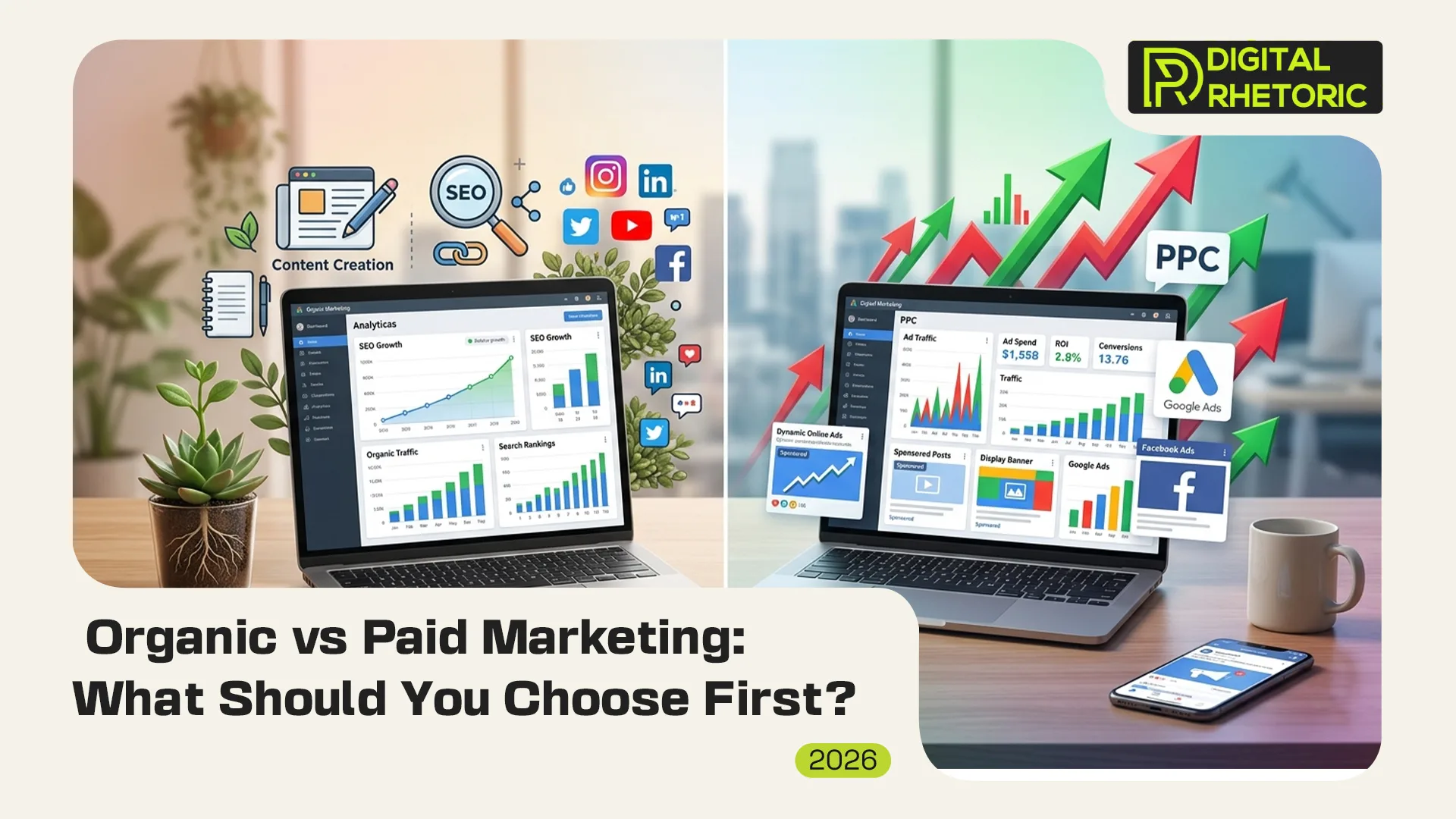
Organic marketing builds traffic naturally over time, while paid marketing uses advertising spend for immediate visibility.
Both approaches solve different business needs.
Organic marketing includes:
- SEO
- Blog content
- Social media content
- Email nurturing
- Community building
Paid marketing includes:
- Google Ads
- Meta ads
- LinkedIn advertising
- YouTube ads
- Sponsored campaigns
Neither approach is automatically better.
The right choice depends on business goals.
Why Does This Decision Matter?
Marketing channels affect cost, lead quality, speed, and long-term growth potential.
Choosing early strategy priorities changes outcomes.
Businesses often need to decide:
- Fast leads versus long-term traffic
- Immediate visibility versus sustained authority
- Ad spend versus content investment
The decision impacts ROI.
Benefits of Organic Marketing
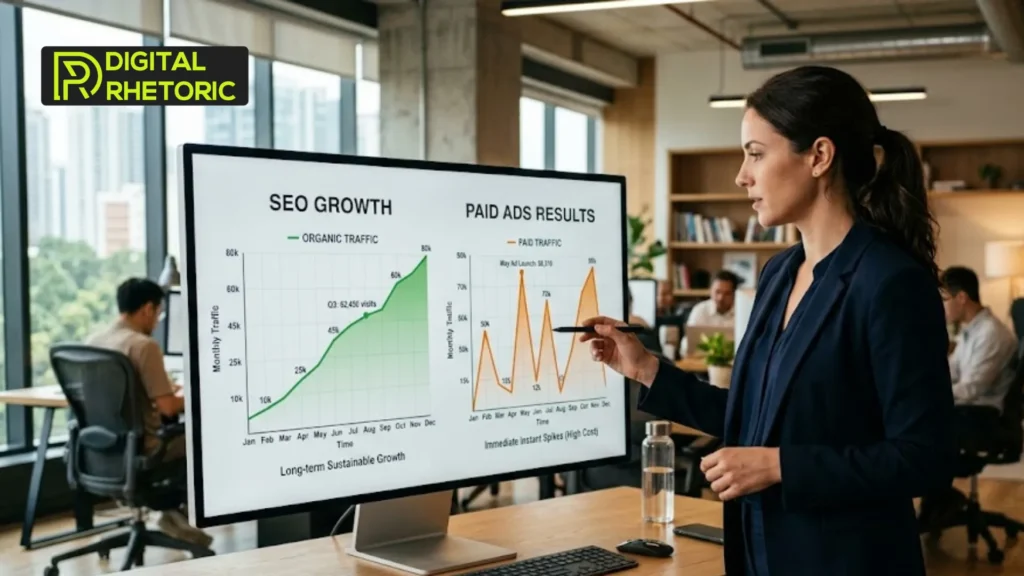
Organic marketing creates long-term visibility and sustainable growth.
Results usually take longer but continue producing value.
Benefits include:
- Lower long-term acquisition costs
- Compounding traffic growth
- Better authority
- Higher customer trust
- Consistent inbound traffic
Strong SEO content can generate traffic for years.
Benefits of Paid Marketing
Paid marketing delivers immediate visibility and faster testing opportunities.
Businesses gain results quickly.
Benefits include:
- Instant traffic
- Faster lead generation
- Better campaign testing
- Scalable audience targeting
- Immediate performance data
Speed becomes its biggest advantage.
SEO vs Paid Ads: Which Is Better?
There is no universal winner. The right approach depends on business stage and objectives.
Compare both:
SEO / Organic
Best for:
- Long-term growth
- Brand authority
- Sustainable traffic
- lower acquisition costs
Challenges:
- Takes time
- Requires consistency

Paid Ads
Best for:
- Immediate leads
- Product launches
- Short-term campaigns
- audience testing
Challenges:
- Traffic stops when spending stops
- Costs increase over time
The strongest strategy often combines both.
How Businesses Should Choose First
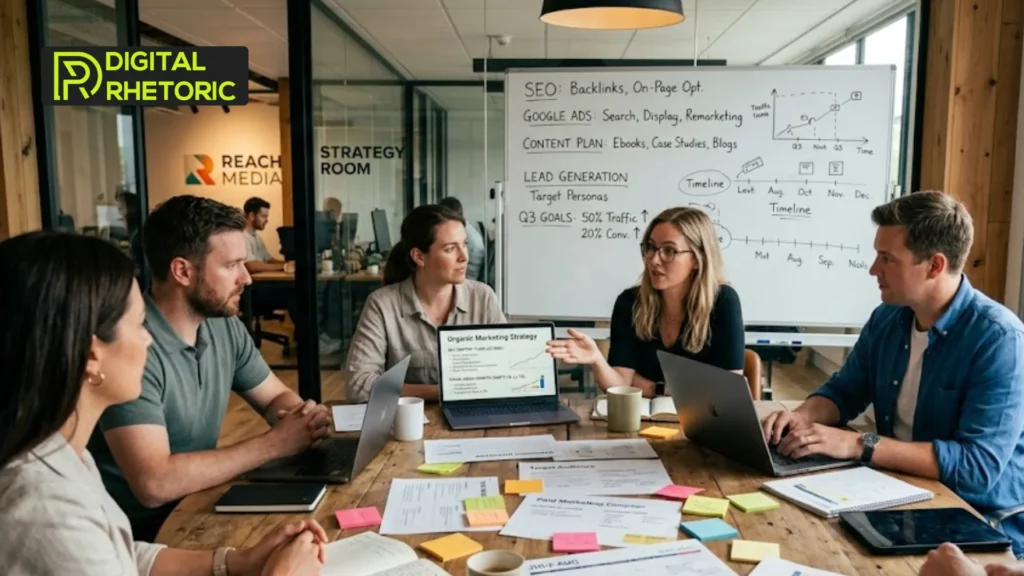
Businesses should choose based on urgency, budget, and growth stage.
Use this simple framework.
Choose organic first if:
- Budget is limited
- Long-term visibility matters
- Brand awareness needs growth
- Content capabilities exist
Choose paid first if:
- Leads are needed immediately
- Product launches require attention
- Testing audiences matters
- Sales targets are urgent
Combine both if:
- Budget allows investment
- Growth goals are aggressive
- Multiple acquisition channels exist
Hybrid strategies usually create stronger results.
Mini Case Study: Startup Growth Strategy
A SaaS startup launches a new productivity platform.
The team initially relies entirely on paid ads.
Traffic grows immediately.
However, lead costs increase every month.
The company adjusts strategy.
They continue paid campaigns but simultaneously invest in:
- SEO blogs
- search-focused landing pages
- educational LinkedIn content
Six months later:
- Organic traffic grows steadily
- ad dependence decreases
- cost per acquisition drops
The business realizes that paid creates speed while organic creates stability.
Digital Marketing Strategy for Beginners
Beginners should avoid treating marketing channels as isolated systems.
Start with balanced foundations.
Recommended approach:
Month 1-3
Focus on:
- Website optimization
- audience research
- basic content creation
Month 3–4
Introduce:
- SEO content
- social media visibility
- limited paid campaigns
Month 5+
Scale:
- top-performing channels
- retargeting campaigns
- conversion optimization
Growth becomes more predictable.
Conclusion
The debate around organic vs paid marketing strategy often creates unnecessary confusion.
Businesses rarely succeed by choosing only one approach forever. Paid campaigns create momentum and immediate visibility. Organic marketing builds authority and sustainable growth.
Understanding SEO vs paid ads which is better starts with understanding your goals rather than following trends.
In 2026, businesses compete across search engines, social platforms, and evolving discovery systems. Visibility now depends on integrated marketing ecosystems rather than isolated tactics.
Digital Rhetoric operates as an AI-first SEO and performance partner, helping businesses build strategies that combine immediate wins with long-term growth.
Want to know where your marketing investment should go first?
Book a performance strategy consultation with Digital Rhetoric and receive a complete growth audit built around your business goals.