
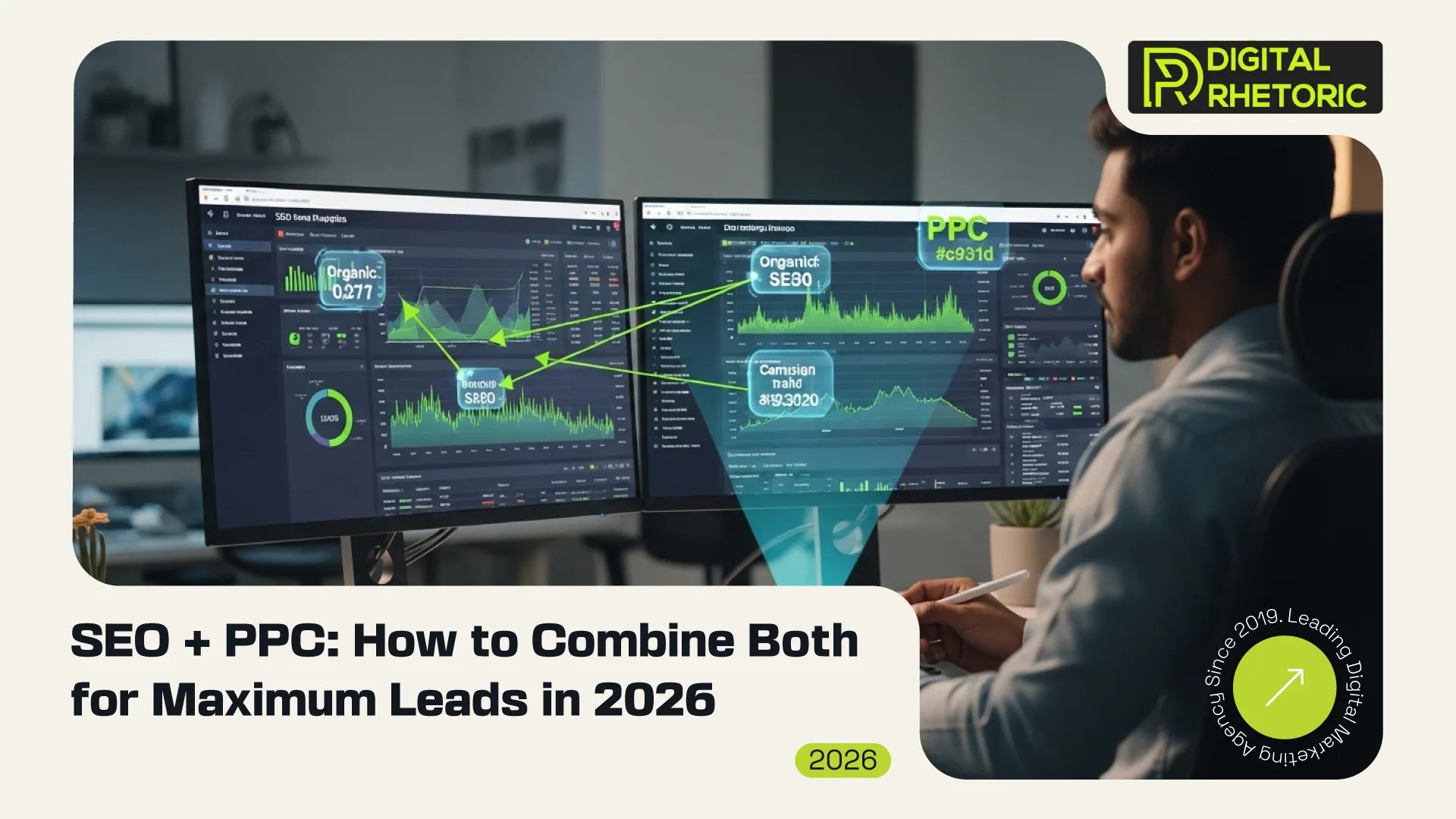
Many businesses treat SEO and PPC as separate strategies.
One team focuses on organic traffic.
Another manages paid campaigns.
Both work hard, but results feel inconsistent.
Leads fluctuate month to month.
SEO takes time to show results.
PPC generates traffic but increases costs quickly.
The two channels rarely support each other.
This disconnect leads to missed opportunities.
In 2026, digital marketing works best when channels operate as a system.
Search behavior is more dynamic, and users interact with multiple touchpoints before making decisions.
Relying only on SEO slows growth.
Relying only on PPC increases dependency on ad spend.
The real advantage comes from combining both.
A strong SEO and PPC strategy aligns organic visibility with paid targeting.
It allows businesses to capture demand at every stage of the customer journey.
In this article, we explore how to combine SEO and PPC campaigns effectively.
You will learn the difference between SEO vs Google Ads for leads, and how integrating both can create a consistent, scalable lead generation system.
What Is an SEO + PPC Strategy?
An SEO and PPC strategy combines organic search optimization with paid advertising to maximize visibility and leads.
Instead of working separately, both channels support each other.
This approach includes:
- SEO for long-term traffic growth
- PPC for immediate visibility
- Data sharing between both channels
The goal is to capture users across multiple touchpoints.
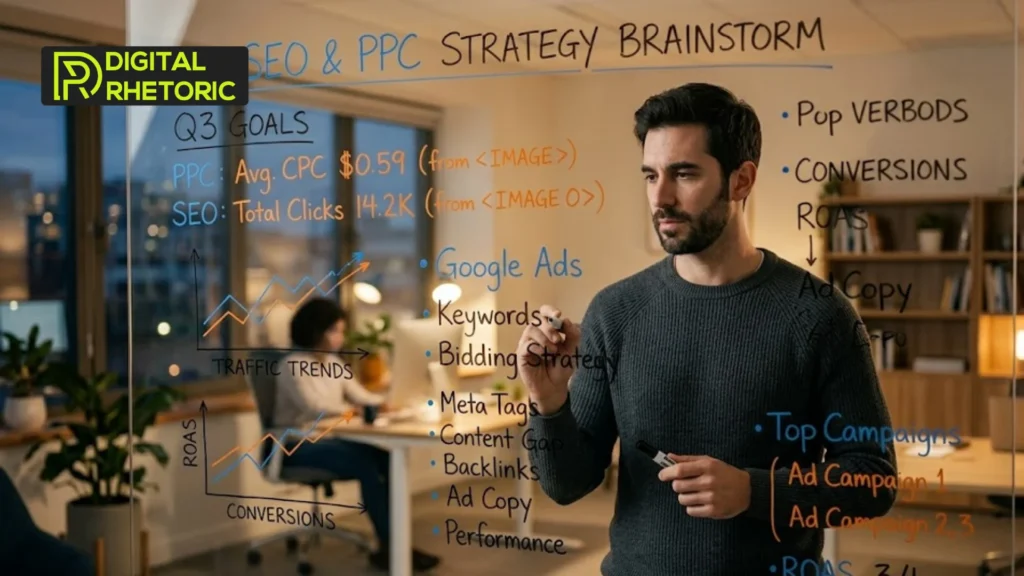
Why Combining SEO and PPC Matters in 2026
Modern search behavior involves multiple interactions before conversion.
Users rarely convert on the first visit.
Combining SEO and PPC matters because:
- Organic search builds trust
- Paid ads capture high-intent users
- Retargeting improves conversion rates
An integrated strategy improves efficiency.
Benefits of Combining SEO and PPC Campaigns
Using SEO and PPC together creates a stronger, more consistent lead generation system.
Each channel fills gaps left by the other.
Key benefits include:
- Increased search visibility
- Better keyword targeting insights
- Improved conversion rates
- Reduced dependency on paid ads over time
This creates a balanced marketing approach.
SEO vs Google Ads for Leads: Key Differences
How does SEO generate leads?
SEO generates leads by attracting organic traffic from search engines.
It focuses on long-term growth.
SEO benefits include:
- Sustainable traffic
- Higher trust from users
- Lower long-term cost
However, it takes time to build momentum.
How do Google Ads generate leads?
Google Ads generate leads by targeting users ready to take action.
They provide immediate visibility.
PPC advantages include:
- Instant traffic
- Precise audience targeting
- Measurable results
However, costs increase with competition.

Why combining both is more effective
SEO builds visibility, while PPC accelerates conversions.
Together, they create a complete funnel.
- SEO captures early-stage interest
- PPC targets high-intent users
- Retargeting connects both
This improves lead quality.
How to Combine SEO and PPC for Maximum Leads
Use PPC Data to Improve SEO Strategy
PPC campaigns provide real-time keyword performance data.
This data helps refine SEO efforts.
Businesses can:
- Identify high-converting keywords
- Optimize SEO content around those keywords
- Focus on topics that drive results
Data alignment improves performance.
Use SEO Content to Support PPC Campaigns
SEO content builds trust before users click on ads.
It strengthens brand credibility.
Examples include:
- Landing pages optimized for both SEO and conversions
- Blog content supporting ad campaigns
- Educational content for retargeting
Content improves ad effectiveness.
Implement Cross-Channel Retargeting
Retargeting reconnects users who interact with your brand through SEO or PPC.
It keeps your brand visible.
Effective retargeting includes:
- Showing ads to website visitors
- Promoting content through social ads
- Using email marketing to nurture leads
This increases conversion rates.
Align Messaging Across Channels
Consistent messaging improves user trust and engagement.
Users should experience the same value proposition across platforms.
Alignment includes:
- Consistent ad copy and website messaging
- Unified brand voice
- Clear conversion paths
Consistency improves performance.
Mini Case Study: SEO + PPC Integration Success
A B2B company relies heavily on PPC campaigns for lead generation.
While ads generate traffic, costs continue rising.
The company integrates SEO into its strategy.
Key actions include:
- Creating SEO-optimized content around high-performing PPC keywords
- Improving landing pages for organic and paid traffic
- Using retargeting campaigns for engaged visitors
Within months, the business sees improved results.
Organic traffic increases, PPC costs stabilize, and overall lead quality improves. Combining SEO and PPC creates a more efficient system.
Steps to Build an Integrated SEO + PPC Strategy
Step 1: Identify High-Intent Keywords
Focus on keywords that indicate strong user intent.
These keywords drive conversions.
Use:
- PPC campaign data
- Search analytics tools
- Customer insights
High-intent targeting improves results.
Step 2: Optimize Landing Pages for Both Channels
Landing pages should convert traffic from both SEO and PPC.
They must be clear and focused.
Important elements include:
- Strong headlines
- Clear call-to-action
- Fast loading speed
Optimized pages improve conversions.
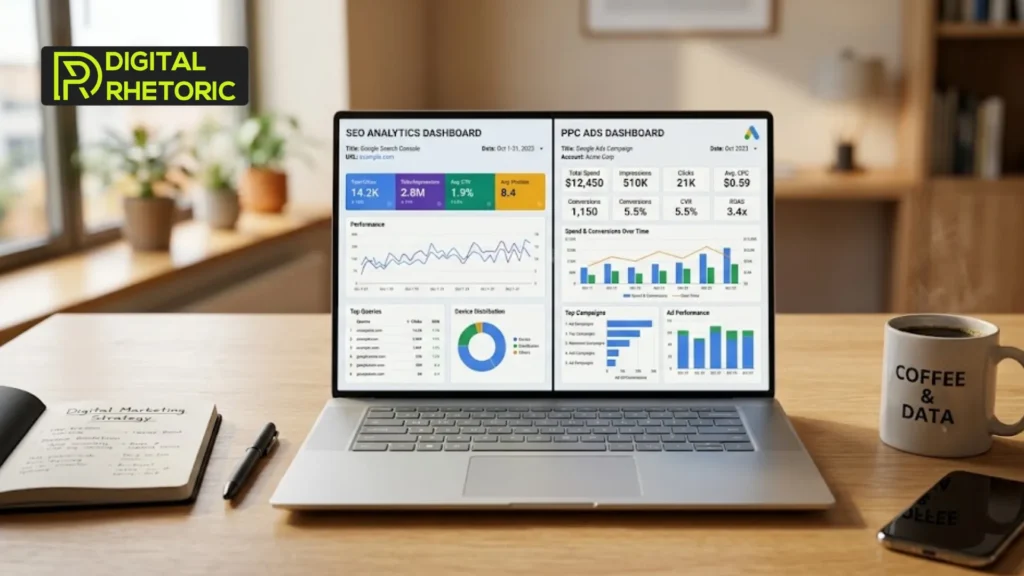
Step 3: Track and Analyze Cross-Channel Performance
Tracking helps understand how SEO and PPC work together.
Businesses should monitor:
- Conversion rates
- Traffic sources
- Cost per acquisition
Data-driven insights improve strategy.
Conclusion
SEO and PPC are not competing strategies.
They are complementary tools that work best together.
Understanding SEO vs Google Ads for leads helps businesses choose the right approach for each stage of the customer journey. Combining both channels creates a system that captures attention, builds trust, and drives conversions.
An integrated SEO and PPC strategy improves visibility, reduces costs, and increases lead quality.
In a digital environment influenced by evolving search behavior and AI-driven discovery, businesses must adopt strategies that connect multiple channels.
Digital Rhetoric operates as an AI-first SEO and performance partner, helping businesses design integrated marketing systems that deliver measurable results.
If your marketing efforts feel fragmented or inefficient, the solution lies in alignment.
Book a performance and SEO strategy audit with Digital Rhetoric and build a lead generation system designed for growth.