
A business launches a PPC campaign with confidence.
Budgets are approved, ads go live, and clicks start coming in, but weeks later the results disappoint.
This situation explains why many marketers ask the same questions.
Why do Google Ads fail even with good traffic?
Why does the conversion rate stay low?
Why does optimization never seem to stick?
The truth is uncomfortable.
Most PPC campaigns fail not because of platforms, but because of strategy gaps.
Automation increases.
Algorithms make more decisions.
User behavior shifts faster than manual adjustments.
This article explains why most PPC campaigns fail and what actually fixes them.
You will understand common PPC mistakes, reasons behind a low PPC conversion rate, and practical ways to improve PPC performance using proven PPC optimization tips.
If paid ads feel expensive but unpredictable, this breakdown brings clarity.
What Does PPC Failure Really Mean?
A PPC campaign fails when it spends consistently without delivering measurable business outcomes.
Clicks alone do not equal success.
Failure often looks like:
- High spend with low conversions
- Leads that do not qualify
- Inconsistent performance week to week
The issue is rarely visibility.
It is alignment.
Why PPC Campaign Performance Matters More Today
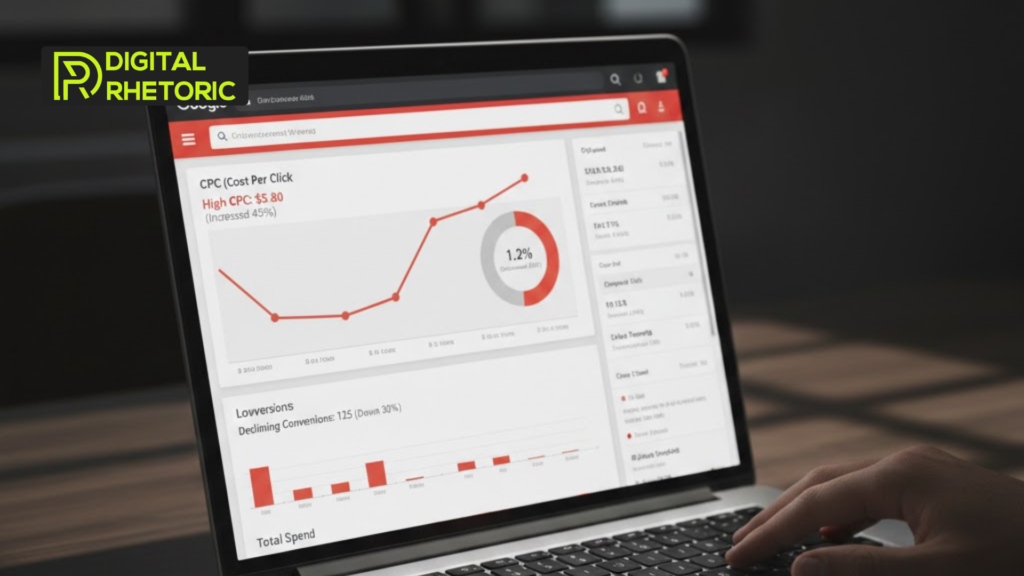
PPC now operates in an AI-driven environment.
Algorithms reward clarity and strong signals.
Performance matters because:
- Automation reacts faster than humans
- Poor data trains algorithms incorrectly
- Rising competition increases costs
When PPC fails, recovery becomes expensive.
Top Reasons Why PPC Campaigns Fail
Why do Google Ads fail even with traffic?
Most Google Ads fail because intent and experience do not match.
Traffic arrives, but expectations break.
Common causes include:
- Broad or unfocused keywords
- Weak ad-to-landing-page alignment
- Generic messaging
This leads to wasted clicks.
How targeting mistakes hurt PPC performance
Poor targeting attracts the wrong audience.
Even perfect ads fail when shown to the wrong users.
Targeting mistakes include:
- Overly broad audience settings
- Ignoring negative keywords
- Relying too heavily on automation without signals
Targeting defines outcome quality.
Why low PPC conversion rates persist
A low PPC conversion rate usually signals experience problems, not ad problems.
Clicks stop converting after arrival.
Common issues include:
- Slow landing pages
- Unclear value proposition
- Too many form fields
- Weak trust signals
Conversion happens after the click.
Benefits of Fixing PPC the Right Way
Fixing PPC creates compounding performance gains.
It improves efficiency across campaigns.
Key benefits include:
- Lower cost per acquisition
- Higher-quality leads
- More predictable scaling
- Better algorithm learning
Optimization improves outcomes, not just metrics.
How to Improve PPC Performance Strategically

What is the first step in PPC optimization?
The first step is redefining success signals clearly.
Algorithms need direction.
Define:
- Primary conversion action
- Lead quality thresholds
- Acceptable acquisition cost
Clear goals train platforms correctly.
How landing pages affect PPC success
Landing pages determine whether clicks turn into conversions.
Ads only open the door.
Effective landing pages include:
- Clear headline aligned with ad copy
- One focused call to action
- Fast load times
- Strong credibility signals
Page experience influences results heavily.
How data quality impacts PPC campaigns
Algorithms optimize based on the data they receive.
Bad data leads to bad decisions.
Improve data quality by:
- Tracking real conversions
- Filtering low-quality leads
- Aligning CRM and ad platforms
Clean signals improve performance.
PPC Optimization Tips That Actually Work
Optimization works best when focused on fundamentals.
Small improvements compound.
Effective PPC optimization tips include:
- Segmenting campaigns by intent
- Testing ads against specific outcomes
- Reviewing search term reports regularly
- Adjusting bids based on performance, not habit
Consistency matters more than constant change.
AI-Driven Discovery and PPC Performance
AI-driven systems now influence how ads and content appear together.
Users see fewer options and clearer summaries.
For example, when users research solutions, AI-powered discovery experiences often surface trusted, relevant results alongside ads.
Poor ad relevance or weak landing experiences reduce trust instantly.
PPC success now depends on clarity and credibility.
Mini Case Study: Turning Around a Failing PPC Campaign
A B2B services company struggles with rising ad costs.
Clicks increase, but leads remain poor.
The fix focuses on alignment.
Key changes include:
- Narrowing keyword intent
- Improving landing page clarity
- Cleaning conversion tracking
- Reducing low-quality traffic
Results show improved conversion rates and lower acquisition costs.
The campaign did not need more budget.
It needed better structure.
Common PPC Mistakes Businesses Keep Making
Many failures repeat the same patterns.
Common PPC mistakes include:
- Scaling before stabilizing
- Ignoring search intent
- Trusting automation without oversight
- Measuring clicks instead of outcomes
Avoiding these protects ROI.
Conclusion
Most PPC campaigns fail quietly, not dramatically.
They attract traffic without conversions.
They spend without learning.
They scale before stabilizing.
Understanding why Google Ads fail helps businesses avoid wasted spend.
Fixing PPC mistakes improves consistency and predictability.
Clear strategy and data alignment raise a low PPC conversion rate.
In an AI-driven advertising environment, platforms reward strong signals and clear outcomes.
Guesswork no longer works.
Digital Rhetoric operates as an AI-first SEO and performance partner.
We help businesses diagnose failures and rebuild PPC strategies that scale with intent.
If your PPC spend feels busy but underwhelming, the issue is not effort.
It is alignment.
Book a PPC performance audit with Digital Rhetoric and turn wasted spend into measurable growth.