

A potential customer clicks on your website, waits a few seconds, and then leaves.
They do not read your content.
They do not see your offer.
They do not convert.
This happens silently, thousands of times a month, on slow websites.
In 2026, website speed is no longer a technical detail handled in the background.
It directly affects how users perceive your brand, how search engines rank your pages, and how AI-driven systems evaluate trust.
Search engines and users now behave similarly.
They expect fast, smooth experiences.
Anything slower creates friction and doubt.
This shift matters because modern discovery happens quickly.
Users compare fewer options.
Algorithms favor experiences that reduce effort.
This article explains how website speed impacts SEO, conversions, and user trust in practical terms.
You will understand website speed SEO, the real slow website impact, and how page speed optimization supports growth.
You will also learn core web vitals explained in simple language and how website performance optimization fits into an AI-driven search landscape.

What Is Website Speed?
Website speed measures how quickly a page loads and becomes usable for visitors.
It reflects both technical performance and user experience.
Key speed indicators include:
- Page load time
- Time to first interaction
- Visual stability during loading
These factors shape first impressions instantly.
Why Website Speed Matters More Than Ever
Website speed influences rankings, conversions, and trust at the same time.
It affects both humans and algorithms.
Speed matters because:
- Search engines prioritize fast experiences
- Users abandon slow pages quickly
- AI systems assess usability and quality
This makes speed a business-critical factor.
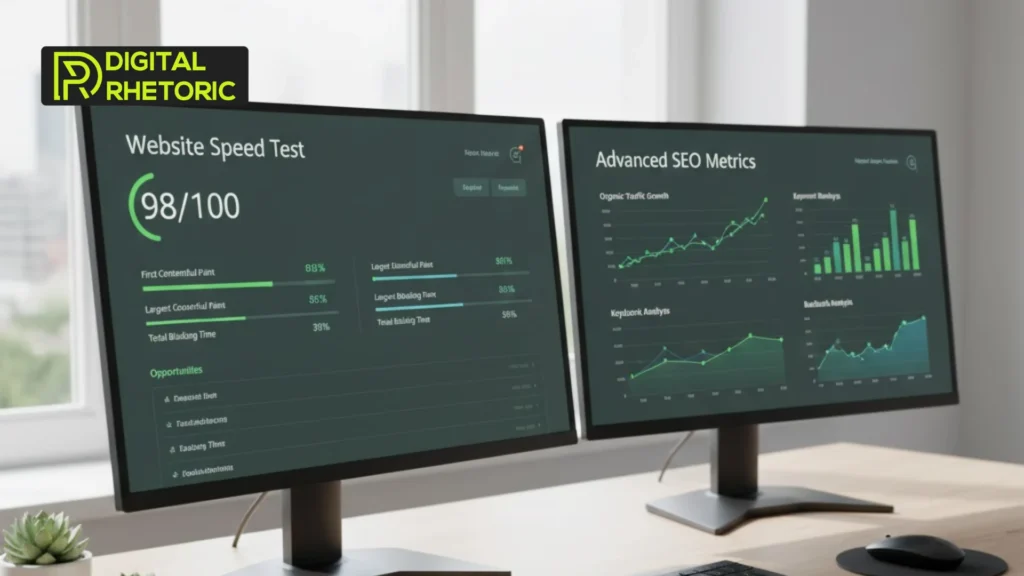
Website Speed and SEO Explained
How does website speed affect SEO?
Website speed SEO directly influences how search engines rank pages.
Fast sites signal quality and usability.
Search engines evaluate:
- Page load performance
- Interaction responsiveness
- Visual stability
Slow pages struggle to compete, even with strong content.
What are Core Web Vitals?
Core Web Vitals measure real user experience on a website.
They focus on loading, interaction, and stability.
Core Web Vitals explained simply:
- Largest Contentful Paint (LCP): How fast main content loads
- Interaction to Next Paint (INP): How responsive the page feels
- Cumulative Layout Shift (CLS): How stable the layout remains
These metrics directly affect rankings.
Impact of Website Speed on Conversions
A slow website reduces conversions before content is even consumed.
Speed sets the tone for the entire journey.
The slow website impact includes:
- Higher bounce rates
- Lower form submissions
- Reduced trust in offers
Even a one-second delay can change outcomes.
How Website Speed Builds or Breaks User Trust
Users associate speed with professionalism and reliability.
Slow sites feel outdated or unsafe.
Trust signals tied to speed include:
- Smooth navigation
- Quick responses
- Stable page layout
Fast experiences feel credible and modern.
Page Speed Optimization Strategies That Work
How can businesses improve page speed effectively?
Page speed optimization focuses on removing friction from loading and interaction.
It combines technical fixes and smart design choices.
Key strategies include:
- Compressing and optimizing images
- Reducing unnecessary scripts
- Using modern hosting and caching
- Minimizing layout shifts
These changes improve experience quickly.
Why mobile speed matters more than desktop
Most users experience your site on mobile first.
Mobile speed affects rankings and conversions heavily.
Best practices include:
- Mobile-first design
- Lightweight page layouts
- Touch-friendly interactions
Mobile optimization is non-negotiable.
Website Performance Optimization in an AI-Driven World
AI-driven discovery systems favor fast, usable websites.
They aim to recommend reliable sources.
For example, summaries surfaced through AI-powered search experiences often pull from pages that load cleanly and explain content clearly.
Conversational AI search tools also favor sites that deliver fast, stable experiences.
Speed supports credibility across these systems.

Mini Case Study: Speed Optimization in Action
A B2B services website receives steady traffic but low conversions.
Analytics reveal slow load times and layout shifts.
The optimization focuses on performance.
Key improvements include:
- Image compression
- Script cleanup
- Core Web Vitals optimization
Results show lower bounce rates, longer sessions, and higher lead submissions.
Speed changes behavior without changing content.
Common Website Speed Mistakes to Avoid
Many businesses unintentionally slow down their websites.
Common mistakes include:
- Overloaded plugins
- Heavy images without optimization
- Poor hosting choices
- Ignoring performance monitoring
Avoiding these protects rankings and conversions.
Conclusion
Website speed influences every part of digital performance.
It affects how search engines rank your pages.
It shapes how users trust your brand.
It determines whether visitors convert or leave.
Strong website performance optimization supports SEO, conversions, and credibility together.
Understanding core web vitals explained helps businesses prioritize the right fixes.
In an AI-driven discovery environment, fast and stable experiences matter more than ever.
Speed signals reliability before content is even read.
Digital Rhetoric operates as an AI-first SEO and performance partner.
We help businesses improve speed where it actually impacts results.
If your website loads slowly, growth slows with it.
Book a website performance audit with Digital Rhetoric and uncover what is holding your site back.