
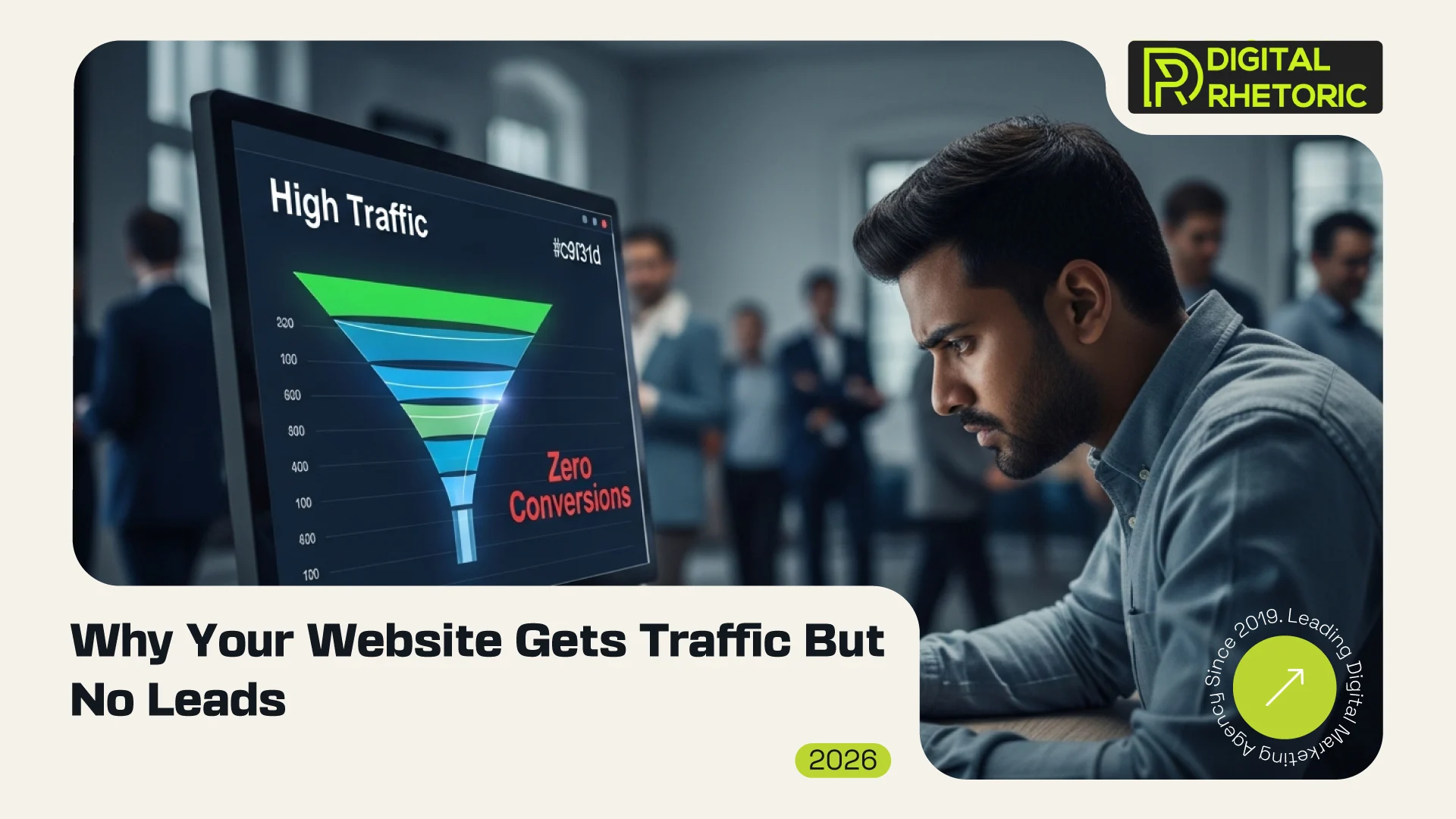
More traffic does not always mean more business.
Many companies celebrate rising website visitors as a sign of success. Reports show increasing sessions, better rankings, and improved visibility.
But there is one problem.
Leads do not increase.
This disconnect frustrates business owners. Marketing seems to work on the surface, yet revenue does not follow. The issue is not always traffic. It is what happens after users arrive.
In 2026, user expectations are higher than ever. Visitors make decisions quickly. If a website does not communicate value, build trust, and guide action within seconds, users leave.
This is why many businesses face the challenge of a website not generating leads despite strong traffic.
The gap lies in conversion strategy.
In this article, we break down why website traffic is not converting, the most common mistakes that block conversions, and how businesses can convert website visitors into leads using practical, proven strategies.
What Does “Website Not Generating Leads” Mean?
A website not generating leads attracts visitors but fails to convert them into inquiries, sign-ups, or sales.
Traffic alone does not guarantee results.
Common symptoms include:
- High traffic but low conversion rates
- Visitors leaving without taking action
- Low engagement on key pages
This indicates a conversion problem, not a traffic problem.
Why Conversion Matters More Than Traffic
Conversion rate determines how effectively your website turns visitors into potential customers.
Without conversions, traffic has limited value.
Focusing on conversion helps:
- Maximize existing traffic
- Improve marketing ROI
- Reduce dependency on additional ad spend
Optimizing conversions is often more cost-effective than increasing traffic.

Benefits of Improving Website Conversion Rate
Improving conversion rate increases leads without increasing traffic.
It strengthens the overall marketing system.
Key benefits include:
- Higher lead generation from existing visitors
- Better return on marketing investment
- Improved user experience
- Stronger business growth
Conversion optimization drives measurable impact.
Why Your Website Traffic Is Not Converting
Unclear Value Proposition
Visitors must quickly understand what your business offers and why it matters.
Confusion leads to drop-offs.
Common issues include:
- Generic messaging
- Lack of differentiation
- No clear benefits highlighted
Clarity improves engagement.
Poor User Experience
A confusing or slow website discourages users from taking action.
First impressions matter.
Typical UX problems include:
- Slow loading speed
- Difficult navigation
- Cluttered design
Better usability improves conversions.

Weak Call-to-Action (CTA)
Visitors need clear direction on what to do next.
Without guidance, they leave.
Weak CTAs include:
- Vague messaging
- Poor placement
- Lack of urgency
Strong CTAs increase lead generation.
Mismatch Between Traffic and Intent
Not all traffic is relevant or ready to convert.
Wrong audience leads to low conversions.
Common causes include:
- Broad keyword targeting
- Poor ad targeting
- Misaligned content
Targeting improves lead quality.
Lack of Trust Signals
Visitors hesitate to take action if they do not trust your brand.
Trust influences decisions.
Important trust elements include:
- Customer testimonials
- Case studies
- Security badges
Trust increases conversions.
Mini Case Study: Turning Traffic Into Leads
A service-based business generates strong website traffic through SEO and ads.
Despite high visits, inquiries remain low.
The company focuses on conversion optimization.
Key improvements include:
- Simplifying website messaging
- Adding strong call-to-action buttons
- Improving landing page design
Within weeks, conversion rates improve significantly.
The same traffic begins generating more leads, showing that small changes can create large results.

How to Convert Website Visitors Into Leads
Optimize Your Value Proposition
Your website must clearly communicate value within seconds.
Visitors should instantly understand your offering.
To improve clarity:
- Highlight key benefits
- Use simple, direct language
- Focus on customer problems and solutions
Clarity drives engagement.
Improve Website Design and Speed
A fast, user-friendly website keeps visitors engaged.
Performance directly impacts conversions.
Important improvements include:
- Faster page load times
- Mobile-friendly design
- Simple navigation
Better experience leads to higher conversions.
Use Strong, Action-Oriented CTAs
Clear CTAs guide users toward taking action.
They should be visible and compelling.
Effective CTAs include:
- “Get a Free Consultation”
- “Request a Quote”
- “Start Your Project Today”
Strong CTAs improve results.
Align Content With User Intent
Content should match what users are looking for.
Relevance increases engagement.
To align content:
- Target high-intent keywords
- Match landing pages to ads
- Provide useful, relevant information
Intent alignment improves conversions.
Build Trust Through Social Proof
Trust signals reassure visitors and reduce hesitation.
They influence decision-making.
Ways to build trust include:
- Displaying customer reviews
- Sharing case studies
- Highlighting client success stories
Trust increases lead generation.
Conclusion
Traffic without conversions creates frustration.
Many businesses invest heavily in marketing but fail to convert visitors into leads. The issue is rarely visibility alone. It is the experience, clarity, and structure of the website.
Understanding why website traffic is not converting allows businesses to identify gaps in their strategy. By improving messaging, design, targeting, and trust elements, companies can transform existing traffic into meaningful results.
Optimizing how to convert website visitors into leads is one of the most impactful changes a business can make.
Digital Rhetoric operates as an AI-first SEO and performance partner, helping businesses build websites and marketing systems designed for conversions, not just traffic.
If your website attracts visitors but fails to generate leads, the solution lies in optimization.
Request a website conversion audit with Digital Rhetoric and discover how to turn your traffic into real business growth.