
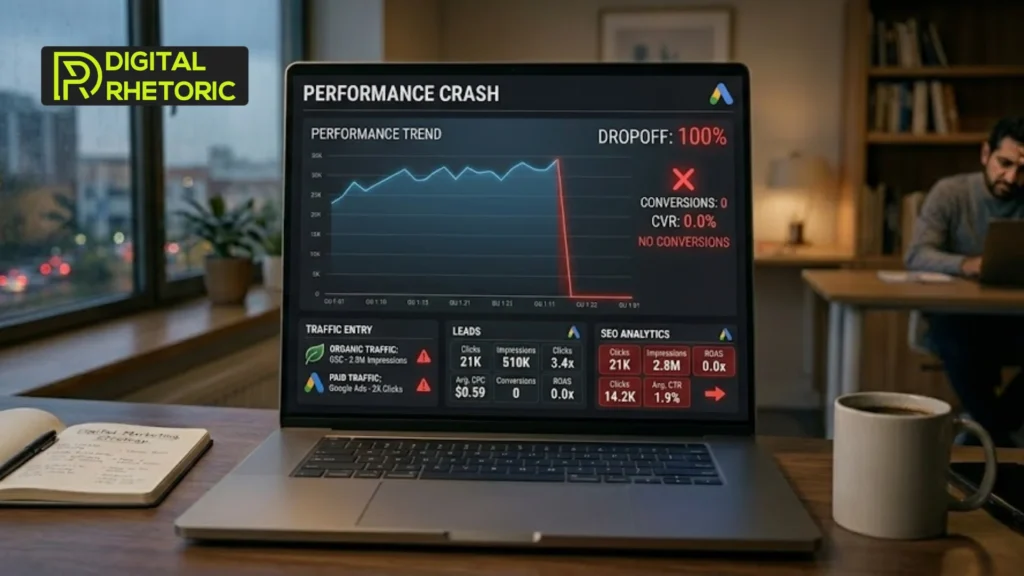
You check your website analytics and notice something alarming.
Traffic drops overnight.
Rankings disappear from key pages.
Leads slow down or stop completely.
This situation often follows a Google algorithm update.
For many businesses, these updates feel unpredictable. One day your content performs well. The next, visibility drops without warning.
The immediate reaction is panic.
Some businesses try quick fixes. Others pause marketing efforts entirely. Both responses often make the situation worse.
In reality, algorithm updates are not random penalties. They are shifts in how search engines evaluate content quality, relevance, and user experience.
In 2026, search systems increasingly prioritize helpful content, structured information, and real user value. Websites that do not meet these expectations lose visibility.
The good news is recovery is possible.
In this article, we explain how to recover from Google update impacts, what causes traffic drops, and the most effective SEO recovery strategies to restore and grow your visibility.
What Happens During a Google Algorithm Update?
A Google algorithm update changes how search engines rank websites based on new quality, relevance, and experience signals.
These updates refine how content is evaluated.
Common changes include:
- Improved content quality assessment
- Better understanding of user intent
- Stronger focus on expertise and trust
- Increased importance of technical performance
Updates aim to improve search results for users.
Why Website Traffic Drops After Updates
Traffic drops occur when a website no longer meets updated ranking criteria.
This does not always mean penalties.
Common reasons include:
- Outdated or thin content
- Poor user experience
- Weak authority signals
- Misalignment with search intent
Understanding the cause is critical for recovery.
Benefits of Recovering Lost Website Traffic
Recovering traffic improves visibility, lead generation, and overall business performance.
It also strengthens long-term SEO stability.
Key benefits include:
- Restored organic traffic
- Improved rankings for key keywords
- Better user engagement
- Stronger authority in your niche
Recovery often leads to stronger performance than before.
SEO Recovery Strategies That Work in 2026
Audit Your Website Content
A content audit helps identify pages that no longer meet quality standards.
Focus on improving or removing weak content.
Key audit actions include:
- Identifying low-performing pages
- Updating outdated information
- Improving content depth and clarity
Content quality plays a major role in recovery.
Align Content With Search Intent
Search intent determines what users expect when they perform a query.
Content must match that expectation.
To improve alignment:
- Analyze top-ranking pages
- Update content structure and format
- Focus on user questions and needs
Intent alignment improves rankings.

Improve Technical SEO and Performance
Technical issues can negatively impact rankings after updates.
Search engines prioritize performance.
Important improvements include:
- Faster page load speed
- Mobile optimization
- Fixing broken links and errors
Technical health supports recovery.
Strengthen Authority and Trust Signals
Search engines evaluate trust and expertise more strictly after updates.
Authority improves credibility.
Ways to strengthen authority include:
- Adding author expertise information
- Building high-quality backlinks
- Publishing in-depth, original content
Trust signals improve rankings.
Update Internal Linking Structure
Internal links help search engines understand content relationships.
They improve site structure.
Effective internal linking includes:
- Connecting related content
- Highlighting important pages
- Improving navigation flow
Better structure improves visibility.
Mini Case Study: Recovering Lost Traffic
A business experiences a significant drop in traffic after an algorithm update.
Several key pages lose rankings.
The company focuses on recovery strategies.
Key actions include:
- Conducting a full content audit
- Updating content to match search intent
- Improving website performance
Within a few months, traffic begins to recover.
Some pages perform better than before. The improvements align the website with updated ranking expectations.

Steps to Recover from a Google Update
Step 1: Analyze Traffic and Rankings
Understanding what changed helps identify the problem areas.
Focus on:
- Pages with the biggest traffic drop
- Keywords that lost rankings
- User engagement metrics
Data analysis guides recovery efforts.
Step 2: Prioritize High-Impact Pages
Not all pages need immediate updates.
Focus on those that drive the most value.
Prioritize:
- High-traffic pages
- Conversion-focused pages
- Important service or product pages
This maximizes recovery impact.
Step 3: Implement Continuous Improvements
SEO recovery is not a one-time fix.
It requires ongoing optimization.
Key actions include:
- Regular content updates
- Monitoring performance metrics
- Testing improvements
Consistency drives long-term results.
Conclusion
Algorithm updates are part of modern SEO.
They reflect how search engines evolve to deliver better results. While traffic drops can feel sudden and disruptive, they also provide an opportunity to improve.
Understanding how to recover from Google update changes allows businesses to adapt and grow stronger. By focusing on content quality, user intent, technical performance, and authority, companies can rebuild visibility and improve long-term performance.
Effective SEO recovery strategies do more than restore traffic. They create a stronger, more resilient digital presence.
Digital Rhetoric operates as an AI-first SEO and performance partner, helping businesses navigate algorithm changes and build strategies that align with modern search systems.
If your website has experienced a traffic drop and you are unsure how to recover, expert guidance can make the difference.
Request an SEO recovery audit with Digital Rhetoric and turn your traffic loss into an opportunity for long-term growth.